
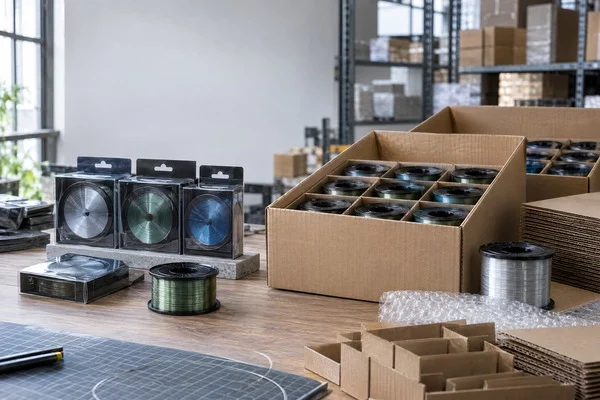
Retail vs Wholesale Fishing Line Packaging: What Should Buyers Specify?
Packaging plays an essential role in the commercial journey of fishing lines. Retail packaging focuses on customer presentation and clear product information for individual sales, while wholesale packaging prioritizes efficient transport, protection, and identification for bulk orders. Confusing these roles or using the same packaging across both channels can lead to overpackaging for wholesalers or inadequate protection for retail displays[^1].
Retail packaging should clearly display product specifications, include barcode placement, and adapt to retail fixtures[^2], while wholesale packaging emphasizes batch traceability, accurate quantities, and logistics efficiency. For buyers managing multiple sales channels, it's critical to specify a complete packaging system tailored to each channel to ensure performance throughout the entire supply chain.
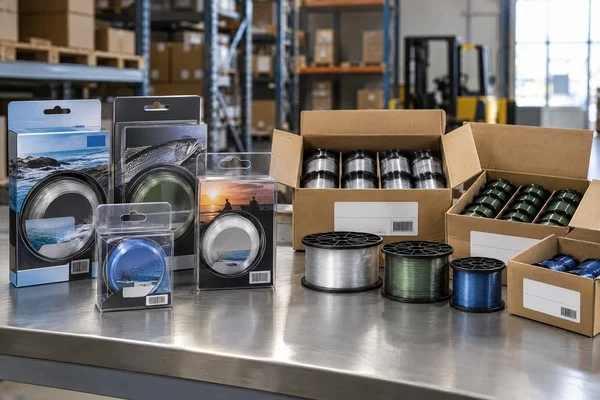
When defining packaging systems for fishing lines, understanding the distinct needs of retail, wholesale, and e-commerce sales channels can help you source packaging that matches the function of each market. Let’s explore in more detail.
What is retail fishing line packaging designed for?
Retail packaging is about striking a balance between marketing appeal and usability for individual buyers.
Retail fishing line packaging highlights the product details on the shelf while protecting the fishing line from damage or tampering. Features like barcodes, clear specifications, and compatibility with retail fixtures are essential.
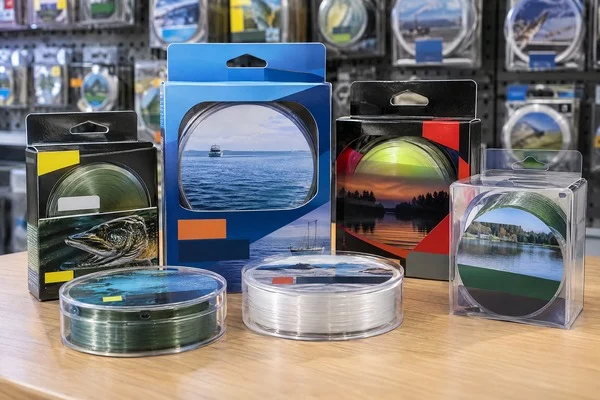
Dive deeper into retail packaging focus:
Retail packaging is the first physical contact a customer has with your fishing line. To make a strong impression, packaging materials should be visually appealing, durable, and easy to handle. Common considerations include:
- Specification clarity: Buyers need to identify the pound test, line diameter, spool length, and color without examining the product.
- Barcode placement: Retail environments depend on scannable barcodes for inventory control and purchases. Proper placement ensures visibility for point-of-sale scanners.
- Fixture compatibility: Packaging should accommodate hooks, shelves, or racks commonly used for display.
- Anti-tamper features: Packaging that secures the product can prevent theft or accidental damage.
If the fishing lines are sold online, durability matters more. Packages need to handle external shipping conditions such as compression during transit or scratching from other packages. Material choices—like reinforced plastic clamshells or double-cardboard layers—can add protection without affecting the unboxing experience.
Retail packaging not only sells; it communicates the brand's commitment to reliability[^3]. Aligning packaging with your target customer creates opportunities to build trust right from the shelf.
What is wholesale fishing line packaging designed for?
In wholesale contexts, the primary purpose of packaging is optimized bulk transport and batch traceability.
Wholesale fishing line packaging maximizes efficiency in logistics, ensuring accuracy in big order quantities, securing batches during handling, and simplifying tracking with clear labeling. Robust materials and dimensions designed for stacked storage are standard.
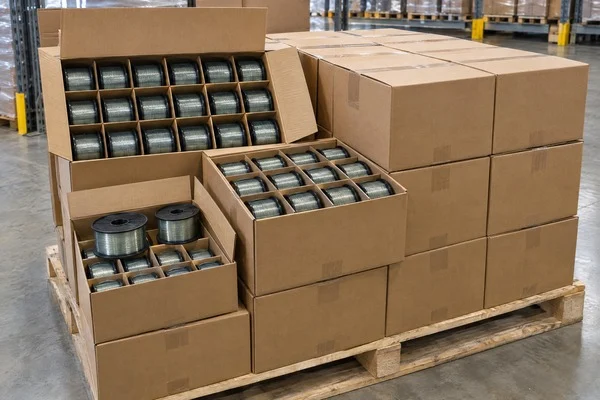
Dive deeper into wholesale packaging focus:
Wholesale packaging requires specifications that suit high-volume transportation and batch accuracy. Consider these:
- Batch traceability: Accurate labeling for lot numbers, manufacturing dates, and dimensions is vital. If wholesale packaging lacks identification, distributors may face errors when repackaging or fulfilling orders downstream.
- Volume optimization: Ideally, boxes, cartons, or reels should have internal spacers and standard pallet dimensions to maximize stacking without damage.
- Protection during transit: Wholesale goods often travel across long distances or changing climates. Damage during air shipment, container loading, or regional transfer affects downstream costs.
- Easy handling: Proper grips or forklifting points simplify storage and movement in large warehouses.
Large spool configurations are common for wholesale purchases[^4], so packaging should ensure spools remain securely wound without slippage. Core dimensions and flange designs should align to avoid compatibility problems when downstream repackagers unwind lines for smaller packaging applications[^5]. Flat packs, bulk carton packaging, and skid-based options are worth exploring for companies with multicountry distributors.
Balancing cost efficiency with production safety standards will positively influence wholesale partnerships over time.
How does e-commerce packaging change channel priorities?
E-commerce introduces new packaging requirements that neither retail nor wholesale fully address.
E-commerce fishing line packaging includes features to endure shipment conditions like compression, surface abrasion, and dimensional weight limitations[^6] not encountered in physical stores. Proper unboxing experience and damage prevention are crucial for online brand representation.
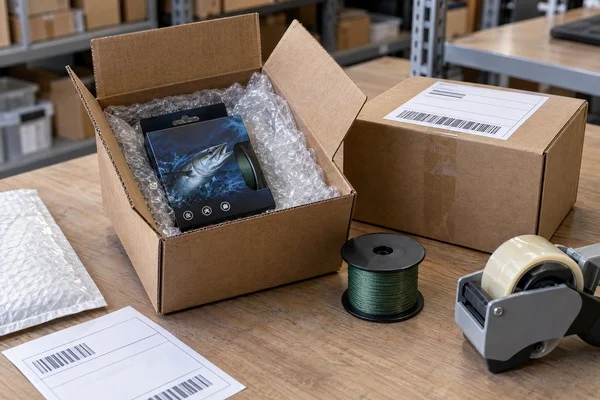
Dive deeper into e-commerce packaging focus:
Unlike retail packaging, e-commerce packaging prioritizes resilience over presentation. Fishing line products shipped individually often face handling conditions like:
- Compression: Packages get stacked tightly at courier depots. Durability prevents distortion or crushed labels during peak delivery cycles.
- Surface abrasions: Scratches or marks from transit detract from perceived brand value upon customer delivery.
- Dimensional weight constraints: Lightweight packaging using compact designs can minimize shipping costs while preserving protection.
For e-commerce buyers, outer shipping cartons need reinforcement, while internal protections should shield product branding directly from punctures or weather exposure. Some brands layer protection with inserts such as foam padding around spool axes for drop resilience.
Professional-grade testing—such as ISTA packaging standards—helps validate whether packaging can endure courier abuse before approval[^7]. E-commerce needs are unique; treating e-commerce sales as retail logistics without adjusting packaging can compromise performance.
What standards should large spool and bulk packaging meet?
Large spool packaging requires specialized parameters for industry-specific logistics.
For bulk configurations of fishing lines, specifying flange dimensions, unwinding tension consistency, and labeling on both the spool and external carton ensures efficiency during downstream repackaging.
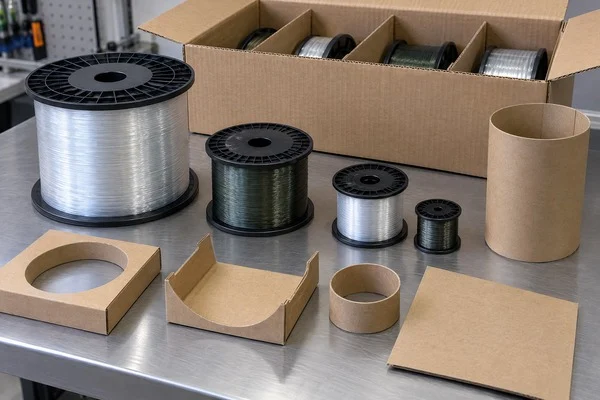
Dive deeper into spool-specific packaging focus:
Bulk spool issues revolve around the mechanics of handling fishing lines at scale. Core materials impact unwinding reliability. Flange dimensions must align with automated winding systems downstream for private-label packagers. Key spool packaging considerations:
- Axle cores: Buyers should specify compatible core diameters for machinery used to repackage spools into individual containers.
- Flange dimensions: Height and tension tolerances prevent spindle skips during unwinding operations.
- Unwinding consistency: Coil tightness and winding maintainability reduces rework at brand-specific private-label conversion stages.
- Outer carton strength: Bulk cartons with proper inserts prevent spools from shifting during truck movement or heavy box stacking.
Downstream users benefit from controlled spool line tension paired with standardized labels such as reel weight capacities. Faulty specifications here invite inefficiencies when service contractors cannot operate machinery seamlessly beyond upstream manufacturing output[^8].
How can buyers approach packaging design specifications?
The best-performing fishing line packaging often comes from a coordinated effort between product functionality and distribution needs.
Packaging design should account for fishing line spools, labels, wrapping, cartons, and any outer shipping materials based on channels’ performance requirements. Buyers should confirm all packaging properties during final performance tests[^9].
Key packaging design approaches:
| Channel Type | Packaging Features | Focus Area |
|---|---|---|
| Retail | Hanging hooks, clear panels, tamper-proof seals | In-store visibility |
| Wholesale | Bulk reels, standardized pallets | Logistics efficiency |
| E-commerce | Reinforced outer boxes, scratch-resistant labels | Shipment durability |
Testing finalized packaging systems lets buyers verify how components interact downstream—from unboxing to bulk transport across repacking warehouses internationally.
Frequently Asked Questions
Why is testing packaging important?
Testing ensures durability and performance across channel-specific conditions like shipping, store handling, and customer use[^10]. It prevents unnecessary losses while confirming usability standards meet expectations.
Can wholesale packaging work across retail applications?
Not without tradeoffs. Wholesale packaging lacks specification visibility and tamper-proofing, making products less appealing for individual buyers. Retail packaging typically cannot support high-volume shipment efficiently.
What tools are recommended for e-commerce brands?
Reinforced containers, bubble inserts around spool axes, and materials with compression-resistance (e.g., corrugated cartons) increase resilience under courier systems prone to damage.
Conclusion
Understanding the distinctions between retail and wholesale fishing line packaging helps buyers create systems suited to each channel’s requirements. Retail packaging focuses on visibility, product information, and anti-tamper features, while wholesale packaging emphasizes logistics efficiency, accurate batch labeling, and damage resistance. For e-commerce, specialized solutions cater to courier-specific handling conditions. Buyers should specify complete packaging systems from spools to cartons for maximized performance across all market channels. Contact us to discuss tailored packaging systems for your fishing line applications.
[^1]: "Overpackaging: A “Hazardous” Public Health Crisis by Tommy ...", https://blogs.nicholas.duke.edu/env212/overpackaging-a-hazardous-public-health-crisis-by-tommy-hessel/. Studies on packaging optimization highlight the risks of overpackaging in wholesale and insufficient protection in retail when the same packaging is used across channels. Evidence role: general_support; source type: research. Supports: Using the same packaging for retail and wholesale channels can lead to inefficiencies and protection issues.. Scope note: The source may discuss general packaging inefficiencies rather than specific to fishing lines. [^2]: "Retail packaging requirements for a smooth store launch", https://www.uspackagers.com/post/retail-packaging-requirements-before-store-launch. Retail packaging guidelines emphasize the importance of clear product specifications, barcode placement, and compatibility with retail fixtures to enhance customer experience and operational efficiency. Evidence role: general_support; source type: education. Supports: Retail packaging should include clear product specifications, barcode placement, and fixture compatibility.. Scope note: The source may provide general guidelines rather than specific data on fishing line packaging. [^3]: "The Impact of Visual Elements of Packaging Design on Purchase ...", https://pmc.ncbi.nlm.nih.gov/articles/PMC11851823/. Research indicates that well-designed retail packaging can enhance consumer trust and communicate a brand's reliability. Evidence role: general_support; source type: research. Supports: Retail packaging can influence consumer perception of a brand's reliability.. Scope note: The source may provide general insights rather than fishing line-specific data. [^4]: "Spooling & Packaging", https://mwswire.com/value-added-services/spooling-packaging/. Research on wholesale packaging practices indicates that large spool configurations are frequently used for bulk purchases in industries like fishing. Evidence role: general_support; source type: research. Supports: Large spool configurations are commonly used in wholesale packaging.. Scope note: The source may provide general insights rather than specific data on fishing lines. [^5]: "49 CFR Part 178 -- Specifications for Packagings", https://www.ecfr.gov/current/title-49/subtitle-B/chapter-I/subchapter-C/part-178. Research on packaging design highlights the importance of standardized core dimensions and flange designs to ensure compatibility in downstream repackaging processes. Evidence role: general_support; source type: research. Supports: Core dimensions and flange designs should align to prevent compatibility issues in downstream repackaging.. Scope note: The source may not specifically address fishing line spools. [^6]: "7. Packaging Jewelry and Beauty Products for Ecommerce ...", https://pressbooks.cuny.edu/packaging/chapter/packaging-jewelry-beauty-ecommerce/. E-commerce packaging guidelines emphasize the need for durability against compression, abrasion, and weight constraints during shipping. Evidence role: general_support; source type: education. Supports: E-commerce packaging must address challenges like compression, surface abrasion, and dimensional weight.. Scope note: The source may not focus specifically on fishing line packaging. [^7]: "14 FAM 720 DIPLOMATIC POUCH", https://fam.state.gov/fam/14fam/14fam0720.html. The International Safe Transit Association (ISTA) provides standardized testing protocols to ensure packaging can withstand the rigors of shipping and handling. Evidence role: general_support; source type: institution. Supports: ISTA standards help validate packaging durability under shipping conditions.. [^8]: "How Packaging Materials Impact Machine Performance & ...", https://www.douglas-machine.com/the-overlooked-link-between-packaging-materials-machine-specs-and-line-performance/. Research on industrial packaging highlights how non-standard specifications can disrupt machinery operations and lead to inefficiencies. Evidence role: general_support; source type: research. Supports: Faulty packaging specifications can cause inefficiencies in machinery operation.. Scope note: The source may not focus specifically on fishing line packaging machinery. [^9]: "Package performance tests", https://www.canr.msu.edu/packaging/learn-collaborate/testing_services/package_performance_tests. Educational resources on packaging design recommend final performance tests to ensure all packaging properties meet required standards. Evidence role: general_support; source type: education. Supports: Buyers should confirm packaging properties through final performance tests.. Scope note: The source may not focus specifically on fishing line packaging. [^10]: "Package performance tests", https://www.canr.msu.edu/packaging/learn-collaborate/testing_services/package_performance_tests. Institutional guidelines on packaging emphasize the importance of testing for durability and performance under different conditions, including shipping and handling. Evidence role: general_support; source type: institution. Supports: Testing ensures packaging durability and performance across various conditions..