
How to Develop a Custom Fishing Line Specification With a Manufacturer
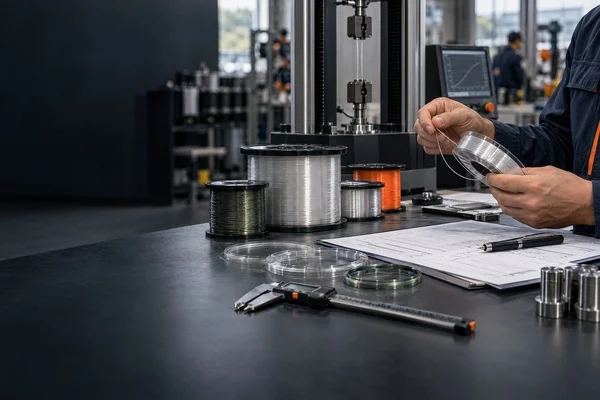
Creating a custom fishing line specification requires more than simply describing the product you want. It starts with understanding your target application and retail positioning and translating these needs into measurable factory limits. When working with a manufacturer, the process combines technical definition, performance trade-offs, and clear production phases.
To develop a fishing line specification successfully, focus first on the intended fishing environment and target sales market. From there, convert your requirements into quantifiable parameters, balancing trade-offs like strength, diameter, flexibility, and cost along the way. Freeze your specification details before mass production to ensure consistent quality[^1].
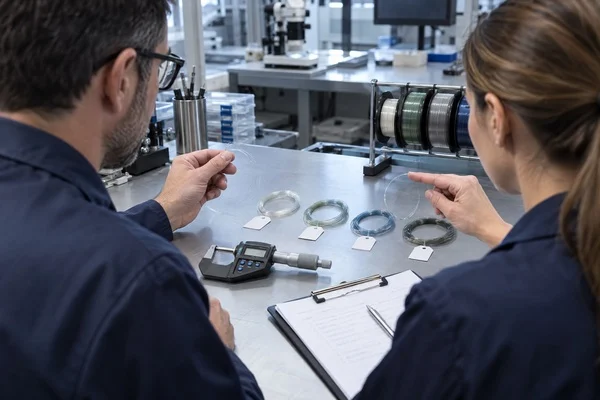
Getting the specification right early can save time, reduce costly mistakes, and build products that satisfy your customers. Let’s explore how to define, develop, and refine fishing line specifications step by step.
How do fishing environments and markets influence specifications?
The fishing environment and retail market directly dictate performance priorities.
Different fishing scenarios demand different line characteristics — from abrasion resistance to stretch. Market preferences affect factors like packaging design, spool length, and price positioning. Combined, these guide how the product specification is framed.
Diving deeper into fishing requirements
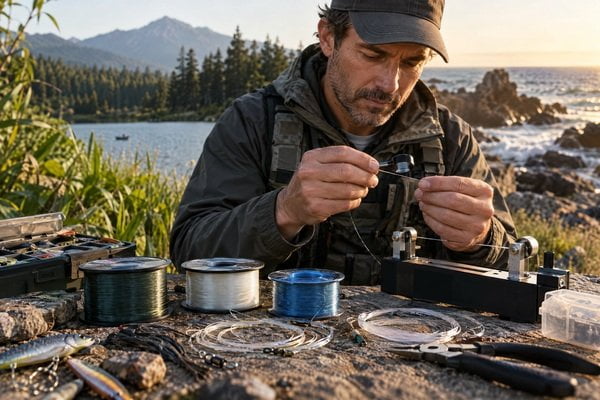
The first step in custom fishing line development is defining the product's fishing application. Consider:
- Saltwater vs. freshwater fishing: Saltwater lines often need higher abrasion and UV resistance[^2], while freshwater needs may balance flexibility and sensitivity.
- Target species: Heavy-duty species require stronger, thicker lines, while smaller species benefit from lighter, less detectable designs.
- Fishing method: The casting distance, sensitivity, or manageability for trolling, casting, jigging, or bottom fishing affects line performance.
Market considerations influence packaging, presentation, and pricing:
- Premium brands: Higher technical refinement, such as PE braided lines with ultra-thin diameters.
- Commodity markets: Competitive pricing with mass-market spool sizes.
- E-commerce vs. retail: Amazon buyers prefer protective, compact packaging[^3]; retail stores demand shelf visibility.
When discussing your project with the manufacturer, be explicit about where, how, and by whom the line will be used. This information shapes the framework for future specifications.
Why is balancing performance trade-offs critical?
Pursuing every performance criterion to its maximum will lead to conflict.
Fishing lines cannot simultaneously optimize for strength, diameter, flexibility, knot performance, abrasion resistance, and cost-effectiveness[^4]. You must prioritize based on your market needs and target species.
Breaking down key trade-offs
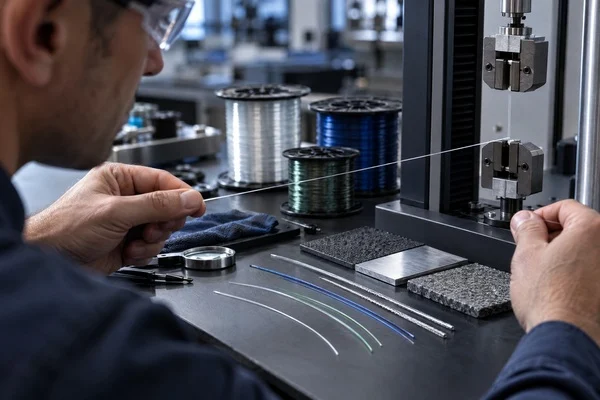
Custom fishing lines require trade-offs in physical attributes:
- Breaking strength vs. diameter: Thinner lines improve casting performance and spool capacity[^5] but often sacrifice raw tensile strength.
- Abrasion resistance vs. flexibility: Lines built for rough environments may lose flexibility and manageability[^6].
- Knot performance vs. low-memory winding: Knot optimization enhances reliability but could compromise handling during storage.
- Softness vs. durability: Softer lines are easier to handle, but may fray faster under heavy use.
Cost pressures are another factor:
- High-end PE braided lines involve intricate manufacturing steps[^7] but allow premium pricing.
- Basic nylon monofilament offers cost-effective strength while limiting customization options.
Manufacturers rely on the parameters you highlight to reach a balance that fits market expectations.
How do benchmark samples help clarify goals?
Benchmark samples provide a starting point for approximating desired performance[^8], but specifications must go further.
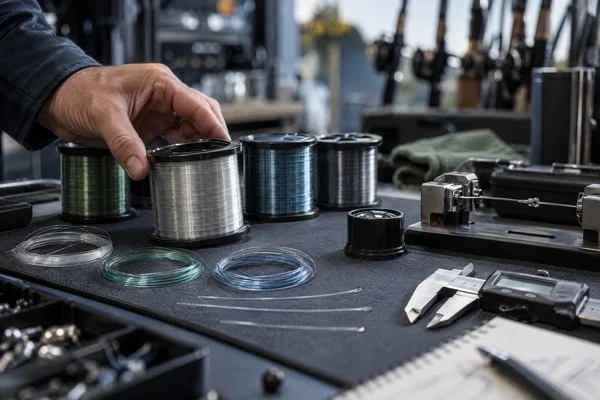
Samples from the market help convey hand feel and visual expectations to manufacturers. However, measurable details like diameter, breaking strength, spool length, and color need clear numerical standards.
Turning subjective feedback into specifics
Market samples may represent established products your fishing line needs to compete with[^9]. Use them to:
- Show line texture or softness for flexibility standards.
- Set color expectations for brand styling.
- Demonstrate packaging preferences for retail presentation.
But don’t stop at qualitative feedback; back your preferences with measurable benchmarks:
- Target diameter ranges based on market or fishing applications.
- Define minimum breaking strength under controlled tensile tests.
- Set spool length tolerances and material types.
- Specify core vs. coating structure where applicable.
A manufacturer can only work effectively with clearly defined technical goals.
Why should product development happen in phases?
Trying to finalize everything in early stages leads to inefficiencies and rework[^10].
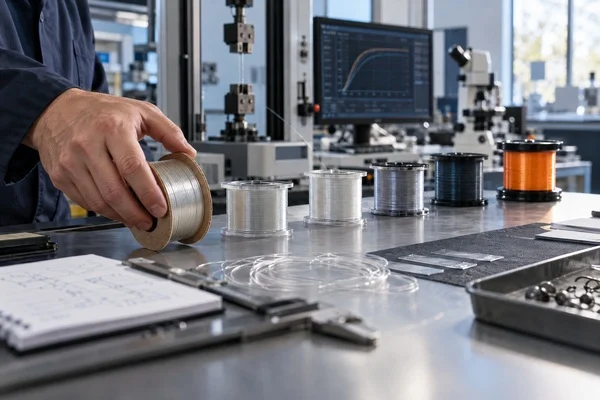
Fishing line development works best when divided into focused phases: core design, performance tuning, surface treatments, and packaging. Freezing each phase ensures clarity as decisions build towards mass production.
Structuring stages of development
Divide specification refinement into clear sequential steps:
- Core structure: First, confirm the material, diameter, and breaking strength foundation.
- Performance adjustments: Fine-tune knot strength, abrasion resistance, or memory traits.
- Color & coating treatments: Match branding or end-use fishing aesthetics.
- Packaging finalization: Lock spool configuration, labeling details, and retail-box design.
By separating each phase, you simplify troubleshooting and ensure that previous decisions remain stable. Freeze specifications using internal version numbers or controlled change-notice rules before progressing to mass production.
How do formal specification documents prevent inconsistencies?
Loose verbal specifications leave room for error in production.
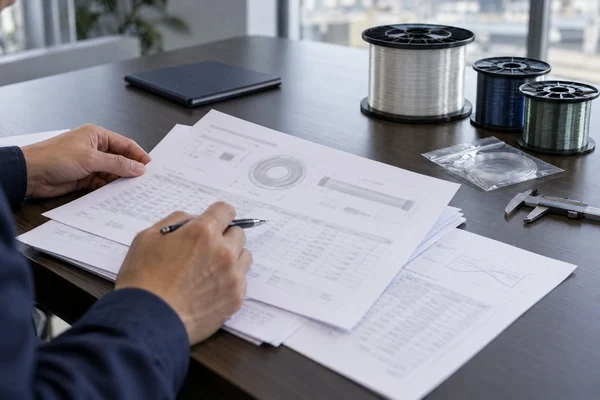
Every custom fishing line project should end with a formal specification document[^11]. This includes version controls, test methods, measurable limits, and a clear procedure for changes.
Elements of a robust specification document:
To ensure batch consistency and minimize surprises, your document should include:
- Final diameter and strength limits.
- Material and strand count requirements.
- Color and coating treatments.
- Measurement tolerances and quality-control methods.
- Testing protocols for breaking strength, knot performance, and abrasion resistance[^12].
- Packaging dimensions and print requirements.
Treat this document as your reference point throughout production. Any updates must be carefully documented to avoid errors or unintended changes.
Frequently Asked Questions
Why is breaking strength not the only fishing line performance criteria?
Breaking strength is one performance metric, but real-world fishing conditions include factors like knot reliability, flexibility, and abrasion resistance. A fishing line optimized for breaking strength alone may fail in specific applications.
What details should I give a manufacturer for custom fishing line development?
Provide information about your target fishing environment, species, storage preferences, packaging style, and market expectations. Share benchmark samples for qualitative traits but always define measurable limits like diameter, breaking strength, and spool size.
How can I test a sample fishing line before mass production?
Evaluate tensile breaking strength, knot reliability, abrasion resistance, diameter tolerance, color consistency, and winding quality. Compare results against your approved specification document to ensure alignment.
Conclusion
Developing a custom fishing line specification with a manufacturer demands more than basic product descriptions. Successful projects turn fishing applications and market goals into measurable parameters while balancing performance trade-offs. To ensure batch consistency, freeze specifications using formal documents that include test methods and tolerances.
At Qiaohui Industrial Monofilament Co., Ltd., we help brands, distributors, and private-label businesses navigate fishing line development — from initial design to mass production. Let’s define the right product together.
[^1]: "Freezing and Food Safety", http://www.fsis.usda.gov/food-safety/safe-food-handling-and-preparation/food-safety-basics/freezing-and-food-safety. Manufacturing best practices suggest that freezing product specifications before mass production helps maintain consistency and reduces the risk of errors. Evidence role: general_support; source type: research. Supports: Freezing specification details before mass production ensures consistent quality.. Scope note: The effectiveness of this practice may depend on the complexity of the product and the manufacturing process. [^2]: "Is Fluorocarbon Leader More Abrasion Resistant Than ...", https://www.saltstrong.com/fishing-tip/fluorocarbon-leader-abrasion-test-vs-mono/. Research indicates that saltwater fishing lines are often designed with higher abrasion and UV resistance to withstand the harsher conditions of saltwater environments, including exposure to salt and sunlight. Evidence role: general_support; source type: research. Supports: Saltwater fishing lines require higher abrasion and UV resistance compared to freshwater lines.. Scope note: The specific requirements may vary depending on the fishing method and target species. [^3]: "Sustainable Ecommerce: Strategies for Eco-Friendly Retail", https://www.apu.apus.edu/area-of-study/business-and-management/resources/sustainable-ecommerce-strategies-for-eco-friendly-retail/. Market research on e-commerce consumer behavior suggests that compact and protective packaging is often preferred for products like fishing lines to ensure safe delivery and ease of storage. Evidence role: general_support; source type: research. Supports: Amazon buyers prefer protective, compact packaging for fishing lines.. Scope note: Specific preferences may vary by region and customer demographics. [^4]: "How To Compare Fluorocarbon Fishing Leader Line", https://greatdaysoutdoors.com/fishing-leader-line/. Material science research highlights that optimizing one property of fishing lines, such as strength, often comes at the expense of others like flexibility or cost-effectiveness. Evidence role: mechanism; source type: research. Supports: Fishing lines cannot simultaneously optimize for strength, diameter, flexibility, knot performance, abrasion resistance, and cost-effectiveness.. Scope note: The specific trade-offs depend on the materials and manufacturing techniques used. [^5]: "Relationship", https://en.wikipedia.org/wiki/Relationship. Studies on fishing line mechanics show that thinner lines reduce air resistance during casting and allow for more line to be wound onto a spool, enhancing both casting distance and spool capacity. Evidence role: mechanism; source type: research. Supports: Thinner fishing lines improve casting performance and spool capacity.. Scope note: The extent of improvement may depend on other factors such as line material and reel design. [^6]: "How to Choose Fishing Line: Mono, Fluorocarbon & Braid ...", https://www.westmarine.com/west-advisor/Selecting-Fishing-Line.html?srsltid=AYCX9vKbVacW-tSpTd2G7SnABCwSV9fo3YQimWbc_7UWU6FGtJXZ1N7T. Research on fishing line materials indicates that increasing abrasion resistance often involves using stiffer materials, which can reduce flexibility and make the line less manageable. Evidence role: mechanism; source type: research. Supports: Fishing lines designed for rough environments may lose flexibility and manageability.. Scope note: The degree of trade-off may vary depending on the specific materials and manufacturing techniques used. [^7]: "Multifilament fishing line", https://en.wikipedia.org/wiki/Multifilament_fishing_line. The production of high-end PE braided fishing lines typically involves advanced weaving techniques and precision engineering to achieve uniformity and strength. Evidence role: mechanism; source type: research. Supports: High-end PE braided lines involve intricate manufacturing steps.. Scope note: Specific manufacturing steps may vary by brand and production facility. [^8]: "fishing line tests", https://www.uakron.edu/polymer/agpa-k12outreach/lesson-plans/fishing-line-tests. Industry practices indicate that benchmark samples are often used to establish initial performance expectations and guide the development of product specifications. Evidence role: general_support; source type: research. Supports: Benchmark samples provide a starting point for approximating desired performance in fishing line development.. Scope note: The effectiveness of benchmark samples depends on their relevance to the target market and application. [^9]: "The role of product development practices on new ... - PMC", https://pmc.ncbi.nlm.nih.gov/articles/PMC7893682/. Competitive analysis in product development often involves studying market samples to understand existing products and identify performance benchmarks. Evidence role: general_support; source type: research. Supports: Market samples may represent established products your fishing line needs to compete with.. Scope note: The relevance of market samples depends on their similarity to the target product and market segment. [^10]: "The role of product development practices on new ... - PMC", https://pmc.ncbi.nlm.nih.gov/articles/PMC7893682/. Studies on product development processes indicate that attempting to finalize all design aspects early can lead to inefficiencies and increased rework due to unforeseen challenges during later stages. Evidence role: general_support; source type: research. Supports: Finalizing all aspects of product development in the early stages leads to inefficiencies and rework.. Scope note: The extent of inefficiencies may vary depending on the complexity of the product and the flexibility of the development process. [^11]: "Prognostic importance of comorbidity in a hospital ... - PubMed", https://pubmed.ncbi.nlm.nih.gov/15161894/. Educational resources on manufacturing emphasize the importance of formal specification documents for ensuring product consistency and minimizing production errors. Evidence role: expert_consensus; source type: education. Supports: Every custom fishing line project should end with a formal specification document.. Scope note: The specific elements of a specification document may vary by industry and product type. [^12]: "fishing line tests", https://www.uakron.edu/polymer/agpa-k12outreach/lesson-plans/fishing-line-tests. Industry standards, such as those from ASTM International, outline testing protocols for evaluating breaking strength, knot performance, and abrasion resistance in fishing lines to ensure quality and reliability. Evidence role: statistic; source type: institution. Supports: Testing protocols for breaking strength, knot performance, and abrasion resistance are essential for fishing line quality control.. Scope note: Specific testing methods may vary by region and manufacturer.