
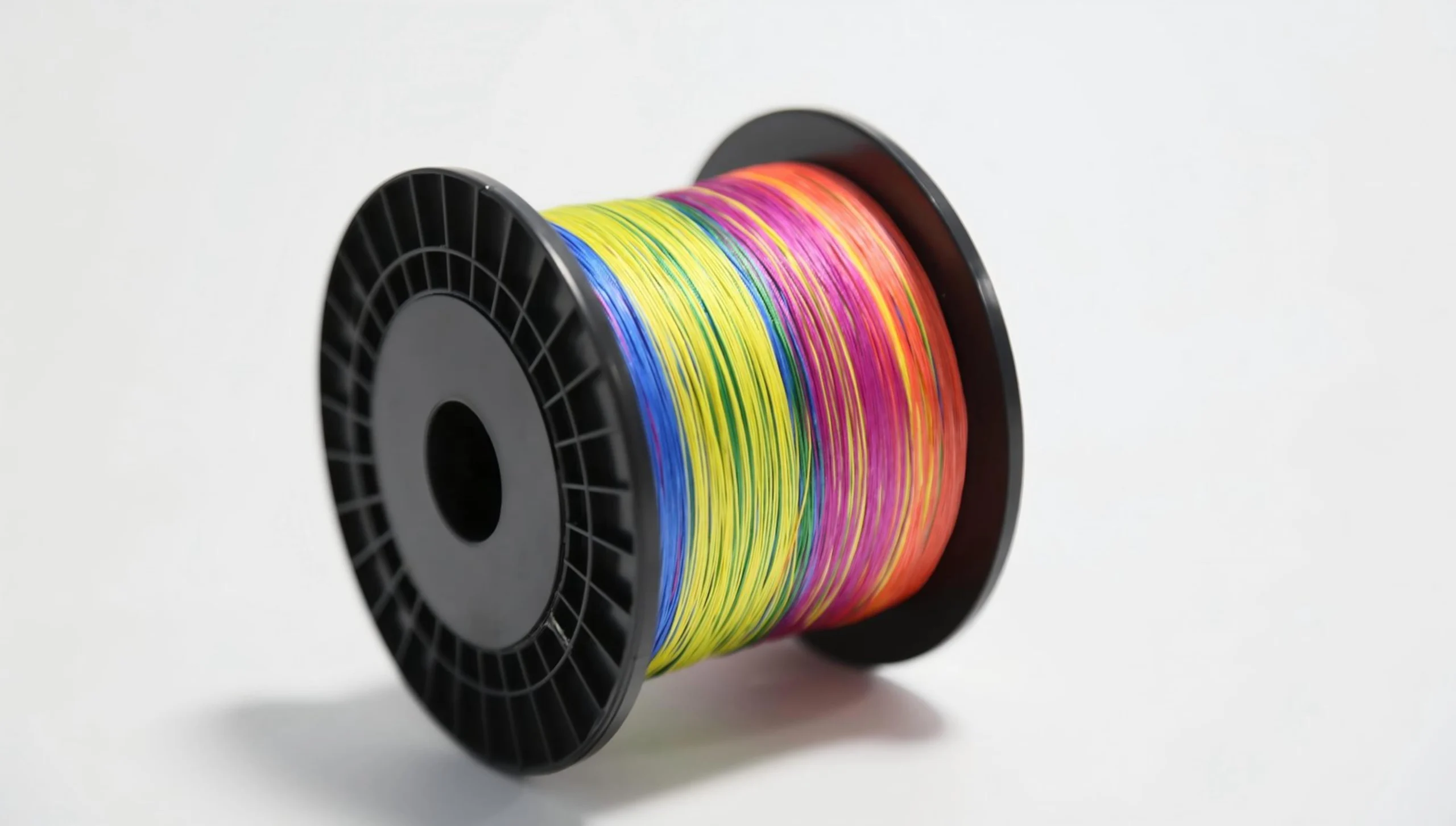
Quick Answer: The Tariff Difference at a Glance For the product profiles most commonly described by exporters as retail nylon fishing line and PE braided fishing line, the current 2026 HTSUS structure generally produces the following comparison: Product profile Likely HTSUS provision General duty rate China Section 301 provision China additional duty Indicative combined duty before other measures Nylon fishing line, cut to length and packaged for retail sale 9507.90.2000 3.7% ad valorem 9903.88.15 7.5% 11.2% PE braided fishing line, chief weight of polyethylene 5607.49.3000 3.6% ad valorem 9903.88.02 25% 28.6% Nylon monofilament, not made up as retail fishing line, ≤1 mm cross-section and ≥67 decitex 5404.19.8020 6.9% ad valorem 9903.88.02 25% 31.9% Plastic monofilament over 1 mm in cross-section 3916.90.3000 6.5% ad valorem 9903.88.02 25% 31.5% The table is a planning guide, not an automatic classification answer. In particular, the difference between retail fishing line and bulk monofilament or textile material can change both the HTSUS heading and the China additional duty. The base rates and Section 301 provisions above are taken from the U.S. International Trade Commission’s 2026 HTS Revision 22 and should be rechecked against the live HTSUS on the date of entry. U.S. International Trade Commission HTSUS, 2026 Revision 22
- Nylon Fishing Line: When 9507.90.2000 Is Usually the Relevant Provision The current HTSUS contains a specific provision for “fishing line put up and packaged for retail sale” under 9507.90.2000, with a general duty rate of 3.7% ad valorem. This is normally the key provision to examine when the finished article is imported as consumer-ready fishing line rather than as industrial monofilament. CBP has repeatedly distinguished finished retail fishing line from monofilament imported merely on a spool. In HQ 956007, CBP explained that line cut to length, wound on a spool, placed in a box or blister package, and clearly labeled as fishing line can be considered “made up” into fishing line and classified under heading 9507. CBP HQ 956007 A later CBP ruling, NY G80871, classified nylon and other polyamide monofilament that was respooled onto consumer spools and packaged for retail sale under 9507.90.2000. The ruling stated a general duty rate of 3.7%, which matches the current 2026 HTSUS listing. CBP NY G80871 What Supports a 9507.90.2000 Analysis? The following facts are helpful, although no single fact is decisive by itself: The line is cut to a defined retail length. It is wound onto a consumer-size spool or dispenser. The package identifies the product as fishing line. The package shows line diameter, breaking strength, length, material, or intended fishing use. The product is imported in a blister pack, carton, or other retail presentation. The line is sold as a finished fishing product, rather than as a raw material or industrial yarn. A bulk spool, even if the commercial invoice calls it “fishing line,” may not satisfy the retail-packaging facts described in the CBP decisions. A spool by itself is not necessarily enough.
- PE Braided Fishing Line: Why 5607.49.3000 Is Commonly Relevant CBP has addressed braided fishing line made principally of polyethylene under heading 5607, which covers twine, cordage, ropes, and cables, whether or not plaited or braided and whether or not impregnated, coated, covered, or sheathed. In NY 881149, CBP classified fishing line in chief weight of polyethylene under 5607.49.3000. The ruling described the provision as covering twine, cordage, ropes, and cables of polyethylene or polypropylene and stated a 7.2% duty rate under the tariff schedule in effect at that time. The current 2026 HTSUS shows 5607.49.3000 with a general duty rate of 3.6%, so the old ruling’s historical rate should not be used as the current rate. CBP NY 881149 Current HTSUS 5607.49 The important technical distinction is usually the chief weight of the fiber and the construction of the product. A PE braided line may contain coatings, cores, or other fibers. The importer should be ready to provide a material breakdown by weight and a clear description of the braid construction. If the line is principally made of other synthetic fibers rather than polyethylene, 5607.50.4000 may be relevant instead. The current general duty rate shown for that provision is also 3.6%, but the classification must follow the actual fiber composition and construction. Current HTSUS 5607.49 and 5607.50
- The China-Origin Duty Difference Is Larger Than the Base-Rate Difference For China-origin products, the major commercial difference is not only the normal HTSUS rate. The relevant Chapter 99 additional duty must also be checked. The 2026 HTSUS states that heading 9903.88.02 imposes an additional 25% ad valorem duty on covered China-origin products listed in U.S. note 20(d). The current list includes the relevant 8-digit provisions in the 3916, 5404, and 5607 families, including 3916.90.30, 5404.19.80, 5607.49.30, and 5607.50.40. HTSUS Chapter 99, U.S. note 20(d) By contrast, the current Chapter 99 schedule states that heading 9903.88.15 imposes an additional 7.5% ad valorem duty on the covered China-origin products listed in U.S. note 20(s). The list includes 9507.90.20, the 8-digit provision corresponding to retail-packaged fishing line. HTSUS Chapter 99, U.S. note 20(s) That produces the following planning comparison for China-origin merchandise: Retail-packaged nylon fishing line: 3.7% base duty + 7.5% Section 301 duty = 11.2%, before any other applicable measures. PE braided fishing line under 5607.49.3000: 3.6% base duty + 25% Section 301 duty = 28.6%, before any other applicable measures. Nylon monofilament under 5404.19.8020: 6.9% base duty + 25% Section 301 duty = 31.9%, before any other applicable measures. These figures are additive duty rates for planning purposes. They do not include merchandise processing fees, harbor maintenance fees where applicable, antidumping or countervailing duties, other Chapter 99 measures, or any future tariff action.
- Why the Product Description and Packaging Matter The same polymer can lead to different classification analyses depending on how the product enters the United States. Finished Retail Fishing Line A finished retail item may be considered fishing tackle under heading 9507 when it is cut to length, packaged for retail sale, and identified as fishing line. This is the most important fact pattern behind the 9507.90.2000 analysis. Bulk Monofilament or Industrial Material If nylon monofilament is imported on a large spool without retail packaging or without evidence that it is made up as fishing line, the article may instead remain in Section XI or Chapter 39. For monofilament of at least 67 decitex and no cross-sectional dimension over 1 mm, the current Chapter 54 structure includes 5404.19.8020 for nylon or other polyamides, with a general duty rate of 6.9%. Current HTSUS 5404.19.8020 If a plastic monofilament has a cross-sectional dimension exceeding 1 mm, Chapter 39 may apply. The current HTSUS lists 3916.90.3000 for monofilament of other plastics, with a general duty rate of 6.5%. Current HTSUS 3916.90.3000 CBP’s classification guide explains that a filament for Section XI purposes is generally less than 1 mm in maximum cross-section and discusses how monofilament, yarn, twine, cordage, and braided structures are analyzed. CBP, Classification of Fibers and Yarns under the HTSUS
- Import Declaration Checklist for Exporters and U.S. Buyers Before quoting a U.S. customer or preparing shipping documents, assemble the following information: Exact material: nylon 6, nylon 66, polyethylene, UHMWPE, polypropylene, polyester, fluorocarbon, or a blend. Material percentage by weight: especially when a PE line includes a core, coating, or mixed-fiber braid. Construction: monofilament, multifilament, braided, plaited, coated, covered, or cabled. Maximum cross-sectional dimension: document the measured diameter or equivalent dimensions. Decitex or linear density: important for Chapter 54 analysis. Cut length and presentation: bulk spool, consumer spool, reel-ready line, blister pack, carton, or other retail packaging. Product labeling: product name, intended use, length, diameter, breaking strength, and material. Country of origin: distinguish manufacturing origin from shipping origin; transshipment does not change origin by itself. Commercial invoice language: avoid vague descriptions such as “plastic line” or “fishing accessories.” Chapter 99 review: check whether the base 8-digit provision appears in the current China tariff list and identify the required Chapter 99 number. Entry-date verification: check the live HTSUS immediately before entry because rates, exclusions, and Chapter 99 provisions can change. Ruling support: if the product is high value, unusual, or commercially important, request a CBP binding ruling or provide an existing ruling that matches the product facts.
- Common Filing Mistakes to Avoid Mistake 1: Using “Fishing Line” as the Only Classification Fact The commercial name is not enough. CBP may distinguish a retail fishing-line article from bulk monofilament based on cut length, packaging, labeling, and use. Mistake 2: Reusing an Old Ruling Rate Older CBP rulings remain useful for understanding classification logic, but their stated duty rates may reflect an earlier tariff edition. For example, older rulings discussed 7.8% or 7.2% rates, while the live 2026 HTSUS shows different base rates for the corresponding provisions. Mistake 3: Treating All Braided Lines as the Same Product PE, nylon, polyester, aramid, and mixed-fiber braids can fall under different provisions. The material that predominates by weight and the construction of the line should be documented. Mistake 4: Reporting Only the Chapter 1–97 HTSUS Number For China-origin goods subject to Section 301, the entry may also require the applicable Chapter 99 number. The broker should confirm the full entry combination rather than reporting only the base HTSUS number. Mistake 5: Assuming a Lower-Duty Classification Is Automatically Acceptable Classification must follow the product’s objective characteristics and the HTSUS rules. Repackaging or routing merchandise through another country does not, by itself, change country of origin or justify a different classification.
- Practical Pricing Impact for Fishing-Line Exporters For a China-based exporter, the classification choice can materially affect the landed-cost discussion: A retail-packaged nylon fishing line classified under 9507.90.2000 may face an indicative 11.2% combined base-plus-Section-301 duty. A PE braided line classified under 5607.49.3000 may face an indicative 28.6% combined base-plus-Section-301 duty. A bulk nylon monofilament classified under 5404.19.8020 may face an indicative 31.9% combined base-plus-Section-301 duty. The exporter should not promise a customer a final landed cost from these percentages alone. The importer must also check the exact country of origin, entry date, exclusions, other Chapter 99 measures, fees, and any trade-remedy duties. For quotations, a practical approach is to state the assumed HTSUS provision, who is responsible for duties, and that the final classification is determined by the U.S. importer and CBP. This reduces the risk that a later broker review turns a product quotation into an unexpected duty claim. Frequently Asked Questions What Is the U.S. HTS Code for Nylon Fishing Line? For nylon fishing line cut to length and packaged for retail sale, 9507.90.2000 is the key provision to evaluate. For bulk nylon monofilament not made up as retail fishing line, 5404.19.8020 may be relevant when the line is at least 67 decitex and no cross-sectional dimension exceeds 1 mm. The final classification depends on the product facts. What Is the U.S. HTS Code for PE Braided Fishing Line? A PE braided fishing line whose chief weight is polyethylene is commonly analyzed under 5607.49.3000. If another synthetic fiber predominates, 5607.50.4000 or another provision may be relevant. Confirm the fiber composition and construction before filing. Is Retail-Packaged Nylon Fishing Line Subject to a Lower China Tariff Than PE Braided Fishing Line? Under the 2026 HTSUS structure reviewed for this article, retail-packaged fishing line under 9507.90.2000 has a 3.7% general duty rate and is listed with the 7.5% China additional duty under 9903.88.15. PE braided line under 5607.49.3000 has a 3.6% general duty rate and is listed with the 25% China additional duty under 9903.88.02. This creates a significant indicative difference, but the product must actually qualify for the relevant provision. Does Putting Line on a Spool Automatically Make It Retail Fishing Line? No. CBP has indicated that a spool alone may be only a method of transporting yarn or monofilament. Retail packaging, cut length, labeling, and evidence that the product is made up as fishing line are important facts. Can an Exporter Use the Same HTS Code for Bulk and Retail Fishing Line? Not necessarily. Bulk monofilament and finished retail fishing line can be classified in different headings. The exporter should give the U.S. broker the complete product specification and packaging details instead of assuming that one code applies to every SKU. Conclusion The main U.S. tariff distinction is not simply nylon versus PE. It is the interaction of material, construction, diameter, retail presentation, country of origin, and Chapter 99 measures. For many China-origin shipments, retail-packaged nylon fishing line under 9507.90.2000 has a materially lower indicative duty burden than PE braided fishing line under 5607.49.3000. However, an incorrectly selected retail classification can create customs risk. Exporters should document the product’s physical characteristics, packaging, and manufacturing process, then have the U.S. importer or broker confirm the live HTSUS treatment before entry. SEO and Distribution Assets Suggested SEO title: U.S. HTS Codes and Tariffs for Nylon vs. PE Braided Fishing Line in 2026 Suggested meta description: Compare 2026 U.S. HTS codes, base duty rates, and China Section 301 tariffs for nylon fishing line and PE braided fishing line. Learn packaging, classification, and filing requirements. Suggested URL slug: /us-hts-codes-tariffs-nylon-pe-braided-fishing-line-2026 Suggested excerpt: Retail-packaged nylon fishing line and PE braided fishing line can fall under different U.S. HTSUS provisions and China additional-duty rates. This guide compares 9507.90.2000 and 5607.49.3000 and explains the documentation needed for a defensible entry. Open Graph title: Nylon vs. PE Braided Fishing Line: U.S. HTS Tariff Comparison 2026 Open Graph description: A practical exporter guide to U.S. HTS classification, base duty rates, Section 301 duties, packaging rules, and customs filing risks. Suggested social post: Exporting fishing line to the United States? Nylon retail line and PE braided line may not receive the same HTS treatment. Our 2026 guide compares 9507.90.2000, 5607.49.3000, base duty rates, China Section 301 duties, and the packaging facts that can change classification. Suggested FAQ Schema Questions What is the U.S. HTS code for nylon fishing line? What is the U.S. HTS code for PE braided fishing line? Is retail-packaged nylon fishing line subject to a lower China tariff than PE braided fishing line? Does putting fishing line on a spool automatically make it retail fishing line? Can bulk and retail fishing line use the same HTS code? Sources [1] U.S. International Trade Commission, Harmonized Tariff Schedule of the United States, 2026 Revision 22
[2] HTSUS 9507.90.2000, fishing line put up and packaged for retail sale
[3] HTSUS 5607.49.3000, polyethylene or polypropylene twine, cordage, ropes and cables
[4] HTSUS 5404.19.8020, nylon or polyamide monofilament
[5] HTSUS 3916.90.3000, plastic monofilament
[6] HTSUS Chapter 99, China additional-duty provisions
[7] CBP HQ 956007, fishing line and headings 5404 and 9507
[8] CBP NY G80871, retail-packaged nylon fishing line
[9] CBP NY 881149, braided polyethylene fishing line
[10] CBP, Classification of Fibers and Yarns under the HTSUS