
How to Choose a Fishing Line Manufacturer for Your Brand
Selecting the right fishing line manufacturer can make or break your brand's product lineup. Whether you're sourcing nylon, carbon, or braided lines, the process demands careful evaluation. Choosing a manufacturer based on their technical expertise, production reliability, and ability to match your brand's needs is essential for long-term success.[^1] Here's how to navigate this crucial decision.
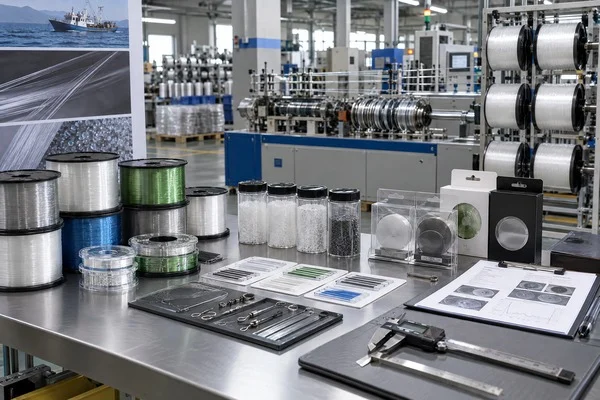
Finding the perfect supplier isn’t just about comparing prices or reviewing catalogs. The key is to align the manufacturer’s strengths with your brand’s product plan while verifying every step of their process. Let’s break down the important considerations.
Why does expertise matter over a broad catalog?
Choosing a manufacturer based on their expertise ensures proper product design and consistent quality. It’s rare for a single manufacturer to excel equally in producing nylon monofilament, fluorocarbon, and braided lines. Each type requires specialized equipment and process knowledge.
Dive Deeper: Assessing Factory Specialization
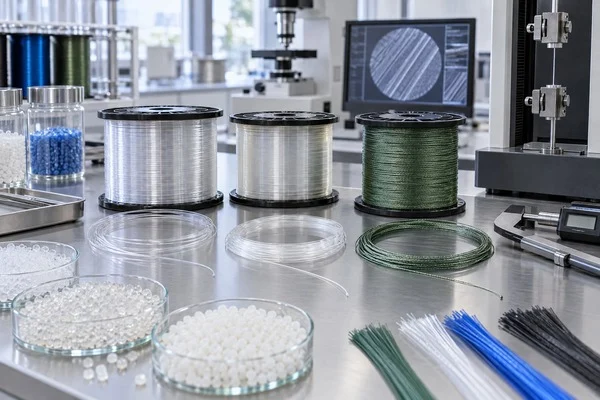
Many fishing line factories are optimized for specific materials. For example, PE braided lines require advanced weaving machinery and strict diameter control, while fluorocarbon lines may demand high purity PVDF extrusion equipment.[^3] Before engaging with a supplier, review their facilities:
- What material types are their specialty?
- Do they publicly advertise their testing capabilities rather than broad product offers?
- Compare their manufacturing focus to your application needs—for example, high tensile strength nylon lines for freshwater fishing brands or abrasion-resistant braided lines for saltwater applications.
A mismatch between the factory's core strengths and your product plan could lead to quality issues later in production.
Should you verify in-house vs. outsourced processes?
In-house production capabilities speak to a factory’s ability to control quality, timelines, and costs.
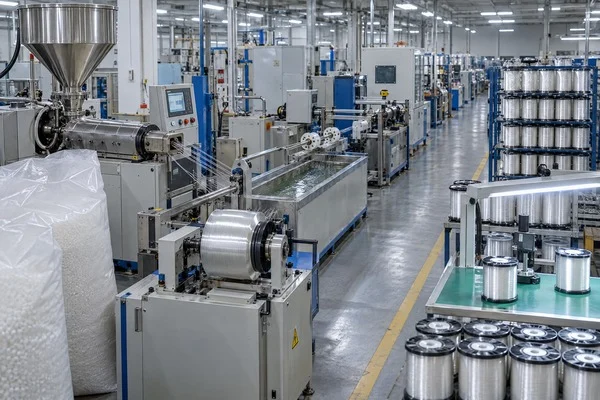
Knowing which processes are handled in-house versus outsourced helps you identify potential delays, hidden risks, and variability in final product quality.[^4] Factories that outsource critical steps (like dyeing or coating fishing lines) may face challenges with consistency.[^5]
Dive Deeper: Hidden Risks in Outsourced Processes
When evaluating manufacturers, ask direct questions about their production workflow. For example:
- Which stages—including extrusion, weaving, dyeing, coating, and spool winding—are completed within their facility?
- How are outsourced processes managed? Are external suppliers held to consistent quality standards?
- Ensure that outsourced steps don’t create bottlenecks for sample turnaround or root-cause analysis during production issues.
A reliable supplier will clearly outline how they supervise their outsourcing relationships and minimize risks. When transparency is lacking, it can become difficult to resolve discrepancies in specifications later.
Why test multiple samples using standardized methods?
Sending identical performance requirements to multiple factories and using consistent testing methods uncovers key differences.
Standardized sample testing ensures fair comparison during supplier selection.[^6] Factories may advertise similar breaking strengths or material guarantees, but performance under real-world conditions often varies.[^7]
Dive Deeper: Setting Up Sample Comparison
To test samples:
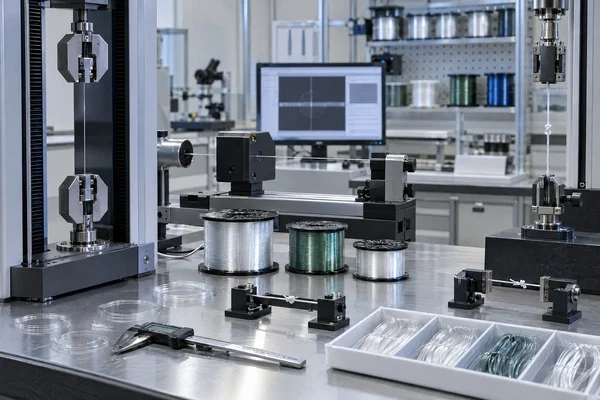
- Define measurable criteria like breaking strength, knot strength, abrasion resistance, memory, and spool winding consistency.
- Apply the same laboratory or field-testing methodology across all samples.
- Eliminate subjective biases by focusing purely on objective results, such as tensile test data.
This ensures you’re evaluating manufacturing quality rather than simply trusting the factory’s claims. If the samples fall short, request clarification on process limitations. Better yet, visit the factory to observe their testing procedures firsthand.
Why prioritize long-term reliability over initial samples?
The ability to replicate results consistently over time defines good manufacturing practice.[^8]
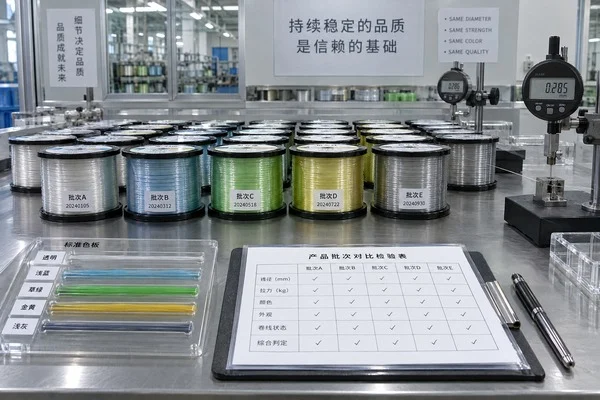
Supplier reliability goes beyond the first sample; the true test is their ability to reproduce quality across repeat orders. Inspect records of previous batch variations, emergency order responses, and consistency tracking mechanisms before making a decision.
Dive Deeper: Evaluating Traceability and Change Management
One sample doesn’t tell the full story of how a factory works over months or years. Investigate:
- Are production batches traceable to specific machine settings and material lots?
- How does the factory communicate changes in tooling, materials, or other processes?
- What systems ensure batch consistency over scalable orders?
For example, you can ask: “If I order the same specification in six months, will I receive identical product performance?” Reliable manufacturers aim for consistency—not just one-off approvals.[^9]
How do you balance cost, MOQ, lead time, and support?
Matching all business factors—not just technical capability—is crucial for sustainable partnerships.
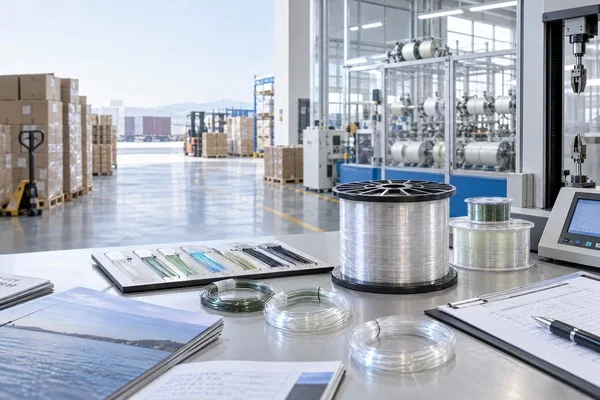
The right manufacturer supports your entire project, including performance, cost management, minimum order quantities (MOQs), lead times, packaging, and post-sale responsiveness. Prioritize those who engage actively in product development rather than waiting for your instructions.
Dive Deeper: Supplier Matchmaking Done Right
When choosing a fishing line manufacturer, ask:
- Can they accommodate both high and low MOQs, especially for product launches?
- What’s the typical lead time for production and shipping? Are urgent fills possible?
- Do they provide troubleshooting or improvements after initial production batches?
- Are packaging options tailored to both B2C (retail shelf) and B2B (bulk distribution)?
Aligning these factors ensures your brand remains competitive in cost and delivery while maintaining quality.
Frequently Asked Questions
What certifications matter when choosing a fishing line manufacturer?
Key certifications include ISO 9001 for quality management, material-specific testing certifications (such as PE and PVDF standards), and environmental compliance if required.[^10] Always ask for documentation.
Do all suppliers test knot strength as well as breaking strength?
Not always. Knot strength testing requires specialized setups and isn’t universal across manufacturers. Confirm whether your supplier offers this test—it’s crucial for end-user performance.
Can I trust specifications printed on the packaging?
Printed data should match the sample-tested data.[^11] However, inconsistencies occur, especially with outsourced production. Always verify with sample testing before approval.
Is OEM customization available for small MOQs?
Yes, many manufacturers accommodate small MOQ customization for specific designs and private-label fishing lines, but options may be limited compared to larger orders.
How do fishing line manufacturers handle returns due to defects?
Reliable factories will typically conduct root-cause analysis on defect claims, offer replacements, and document lessons learned.[^12] Transparency and response speed are key indicators of professional handling.
Conclusion
Choosing a fishing line manufacturer for your brand requires attention to both technical and commercial factors. From verifying material expertise to standardized testing, evaluating batch consistency, and balancing business terms, the decision should align with your entire project’s goals. Prioritize suppliers who are transparent, consistent, and capable of supporting your brand’s growth.
Reach out to us at Qiaohui Industrial Monofilament Co., Ltd. for tailored fishing line solutions backed by measurable quality and performance standards. Let’s build products your customers trust.
[^1]: "Why You Should Consider a Career in Manufacturing", https://www.nist.gov/mep/manufacturing-infographics/why-you-should-consider-career-manufacturing. Research highlights that manufacturers with strong technical expertise and reliable production processes are more likely to meet long-term business goals, as they ensure consistent quality and alignment with brand requirements. Evidence role: general_support; source type: research. Supports: The importance of technical expertise, production reliability, and alignment with brand needs in selecting a manufacturer for long-term success.. [^2]: "Pros and Cons of Working in Manufacturing", https://www.goodwin.edu/enews/pros-and-cons-of-working-manufacturing/. Studies in manufacturing suggest that specialization in specific technologies often results in higher product quality and reliability due to focused expertise and optimized processes. Evidence role: general_support; source type: research. Supports: The reliability of manufacturers specializing in specific technologies compared to those with broad catalogs.. [^3]: "Fishing line", https://en.wikipedia.org/wiki/Fishing_line. Educational resources on fishing line manufacturing confirm that PE braided lines require advanced weaving machinery and precise diameter control, while fluorocarbon lines necessitate high-purity PVDF extrusion equipment for optimal performance. Evidence role: mechanism; source type: education. Supports: The specific equipment and controls required for manufacturing PE braided and fluorocarbon fishing lines.. [^4]: "In-House Production vs. Outsourcing: Weighing the Pros ...", https://www.netsuite.com/portal/resource/articles/erp/in-house-manufacturing-vs-outsourcing.shtml. Research on manufacturing practices indicates that in-house production often provides better control over quality and timelines, while outsourcing can introduce risks such as delays and variability. Evidence role: general_support; source type: research. Supports: The importance of understanding in-house versus outsourced processes in identifying risks and ensuring product quality.. [^5]: "Strategies to Manage Quality in Outsourced Manufacturing ...", https://scholarworks.waldenu.edu/cgi/viewcontent.cgi?article=10146&context=dissertations. Research on manufacturing outsourcing indicates that delegating critical processes can lead to variability in product quality due to less direct control over production standards. Evidence role: general_support; source type: research. Supports: The potential consistency challenges faced by factories that outsource critical manufacturing steps.. [^6]: "The Role of Standardized Tests in College Admissions", https://www.cn.edu/cps-blog/the-role-of-standardized-tests-in-college-admissions-what-matters-most/. Studies on supplier evaluation methods emphasize that standardized testing allows for objective comparisons and reduces biases in assessing manufacturing quality. Evidence role: general_support; source type: research. Supports: The role of standardized sample testing in ensuring fair and effective supplier comparisons.. [^7]: "Myths and Half-Truths About Deceptive Advertising", https://www.ftc.gov/news-events/news/speeches/myths-half-truths-about-deceptive-advertising. Research on product quality assurance shows that advertised specifications, such as breaking strength, often differ from real-world performance due to variations in manufacturing processes. Evidence role: statistic; source type: research. Supports: The variability in performance of products compared to their advertised specifications.. [^8]: "Good manufacturing practices for medicinal products for human use", https://pmc.ncbi.nlm.nih.gov/articles/PMC4399016/. Institutional guidelines on good manufacturing practices highlight the importance of consistent results over time as a critical measure of quality and reliability. Evidence role: expert_consensus; source type: institution. Supports: Consistency in production as a key indicator of good manufacturing practices.. [^9]: "Ensuring Product Quality, Consistency and Patient Supply ...", https://pmc.ncbi.nlm.nih.gov/articles/PMC6182491/. Studies on manufacturing reliability emphasize that consistent quality across production batches is a hallmark of dependable manufacturers. Evidence role: general_support; source type: research. Supports: The focus of reliable manufacturers on achieving consistent quality over time.. [^10]: "ISO 9001 explained", https://www.iso.org/insights/iso-9001-explained. Institutional guidelines on manufacturing standards highlight ISO 9001 as a key certification for quality management, along with material-specific standards like PE and PVDF for specialized products. Evidence role: expert_consensus; source type: institution. Supports: The importance of ISO 9001, material-specific certifications, and environmental compliance in manufacturing.. [^11]: "Determining the alignment of assessment items with ... - PMC", https://pmc.ncbi.nlm.nih.gov/articles/PMC11806761/. Quality assurance studies emphasize the importance of aligning printed specifications with tested data to ensure product reliability and customer trust. Evidence role: statistic; source type: research. Supports: The expectation that printed product specifications should align with sample-tested data.. [^12]: "manufacturing defect | Wex - Cornell Law School", https://www.law.cornell.edu/wex/manufacturing_defect. Research on manufacturing defect management highlights that reliable factories often conduct root-cause analysis, provide replacements, and document lessons to improve future processes. Evidence role: general_support; source type: research. Supports: The practices of reliable factories in handling defect claims, including root-cause analysis and offering replacements..