Jiangmen vs Weihai: Fishing Line Manufacturing Hubs Compared
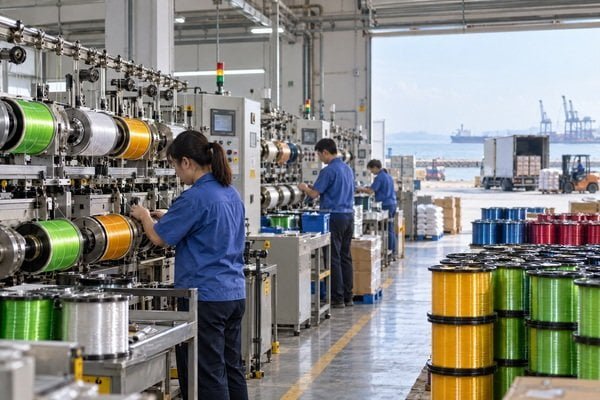
The decision between Jiangmen and Weihai as fishing line manufacturing hubs isn’t as simple as choosing "better quality." It’s about understanding their distinct supply chain ecosystems and matching them to your fishing line product category, ancillary processes, and development goals. Let’s take a deeper look at how to evaluate these two key hubs.
Jiangmen and Weihai each offer unique advantages as fishing line manufacturing hubs. Jiangmen excels in export services with strong packaging, plastic, and printing support[^1], while Weihai benefits from a concentrated fishing tackle industry cluster[^2]. The choice ultimately depends on your product’s specific needs.
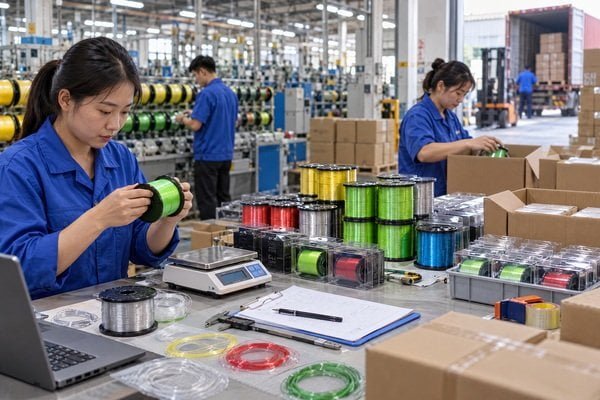
Before diving into their individual strengths, it’s crucial to note that neither location functions as a singular entity. Within each hub, the variety in factory capabilities, expertise, and outsourcing operations can significantly impact the quality and flexibility of your final product.
What makes Jiangmen suitable for fishing line manufacturing?
Jiangmen’s location within the Pearl River Delta gives it access to a wide range of modern production and export resources[^3], making it convenient for fishing line projects that require high levels of customization and retail readiness. It’s particularly strong in complementary processes such as packaging, printing, and logistics.
Jiangmen is ideal for fishing line manufacturing when paired with specific ancillary services like plastic molding, packaging customization, and export logistics, but buyers must verify how much of the process their factory controls.
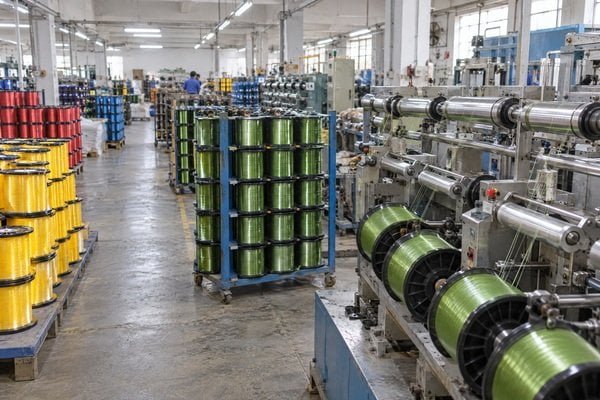
The city's integration with the Pearl River Delta’s vast industrial ecosystem supports a seamless chain for developing and exporting customized fishing line products. Key benefits include:
- Packaging options: Jiangmen offers a wide variety of packaging resources — retail-ready spools, branded boxes, and bulk configurations for distributors.
- Printing expertise: With a strong printing industry nearby, you’ll find efficient ways to customize packaging and labels.
- Export logistics: Proximity to major ports such as Shenzhen and Hong Kong makes it easier to coordinate international deliveries with competitive shipping rates[^4].
Things to verify
While Jiangmen’s location is undoubtedly convenient, not all factories carry out every step in-house. Some operations may outsource fishing line extrusion or braiding to other locations. To ensure consistency and better control over quality, it’s essential to clarify the following before choosing a supplier:
- Degree of vertical integration: Does the factory handle production steps like extrusion, braiding, and winding internally? If they outsource certain processes, be sure to map their value chain.
- Sample quality: Testing product samples for breaking strength, diameter accuracy, and knot performance helps verify production reliability early[^5].
- Coordination efficiency: Understanding how they handle issues across different steps, especially when relying on outside processes, will protect against delays or inconsistencies[^6].
Why choose Weihai for fishing line manufacturing?
Weihai’s strength lies in its comprehensive fishing tackle industry cluster[^7]. The city has a long-established reputation as a fishing product hub, making it particularly convenient for buyers looking to source fishing lines alongside other tackle like rods, reels, and lures.
Weihai excels as a manufacturing hub for buyers seeking integrated sourcing of fishing lines and other tackle products[^8], but factory specialization varies significantly between manufacturers.
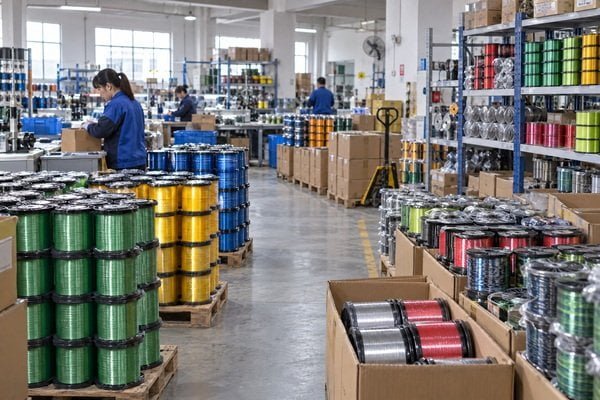
What makes Weihai unique is its ability to connect multiple fishing-related industries and processes within a relatively small geographic footprint. The benefits include:
- Fishing tackle aggregation: Weihai is home to manufacturers specializing in nearly every type of fishing gear, simplifying procurement for multi-product orders.
- Industry experience: Many factories have demonstrated expertise in traditional species-specific fishing requirements[^9], from nylon to fluorocarbon and PE braided lines.
- Prototyping speed: With key facilities often located nearby, it’s easier to coordinate mold adjustments, spool assembly, and trial testing within reasonable timelines.
Things to verify
Although Weihai supports fishing line and tackle procurement on a broader scale, individual factory specializations differ greatly. Buyers should focus on these questions:
- Factory expertise: Is the factory proficient in your specific fishing line type (e.g., braided vs. fluorocarbon)?
- Quality control: How thoroughly does the factory conduct strength and abrasion testing on-site? Are disciplines consistent across multiple batches?
- Ability to scale: Inquire about past customer projects to ensure the factory can handle the demands of full-scale production consistently.
- Distances within the supply chain: Even in clustered ecosystems, logistical delays may arise if critical steps like printing or molding occur at distant supplier locations.
Why does supply chain mapping matter more than city choice?
No matter the hub, selecting the ideal factory based on the supply chain layout is more important than picking the city itself. The downstream effects of outsourced processing can impact sample approval speed, production troubleshooting, and delivery timelines.
Supply chain mapping is essential for efficient fishing line development[^10]. Confirm proximity across molding, printing, winding, and packaging before committing to production.
Proper evaluation of a factory goes beyond the industrial zone listed on its business license[^11]. Instead, you should focus on understanding:
- Cross-process distances: Are nearby facilities collaborating efficiently across mold preparation, printing, and packaging assembly?
- Sample adaptability: Time required to adjust prototypes matters when troubleshooting design flaws.
- Problem resolution speed: Factories with vertically integrated setups often resolve issues faster than those heavily reliant on external suppliers.
Practical advice for buyers
In practice, successful fishing line development should follow this sequence:
- Identify the factory first. Prioritize technical expertise, consistency in testing, and proven output before considering location as a factor.
- Define the requirements early. Clarify diameter tolerances, strength ratings, color patterns, and packaging preferences upfront to reduce ambiguity.
- Verify production discipline. Observe whether sample production quality matches batch-level consistency — these should align seamlessly.
Frequently Asked Questions
Which city produces the highest-quality fishing lines?
Both Jiangmen and Weihai can deliver high-quality fishing lines, but quality depends on the expertise and processes of the specific factory you choose. Always evaluate a factory’s vertical integration, testing protocols, and production consistency.
Should I use Jiangmen or Weihai for custom packaging?
Jiangmen is generally more equipped for custom packaging projects due to its proximity to advanced printing and plastic molding facilities. However, Weihai factories may provide packaging services as part of broader tackle procurement.
What’s the main difference between Jiangmen and Weihai hubs?
Jiangmen specializes in ancillary services like packaging and export logistics, while Weihai benefits from its concentrated fishing tackle industry cluster. Choose based on your need for standalone fishing lines or combined tackle sourcing[^12].
Conclusion
Jiangmen and Weihai both offer distinct advantages for fishing line manufacturing. Jiangmen excels at integrating packaging and export logistics, while Weihai’s fishing tackle cluster supports consolidated sourcing. Ultimately, your choice should prioritize factory capability, supply chain efficiency, and production consistency over geographic labels. Contact us to discuss your fishing line specifications and tailor your procurement strategy with confidence.
[^1]: "Pearl River Delta", https://en.wikipedia.org/wiki/Pearl_River_Delta. A report by the Pearl River Delta Industrial Development Authority highlights Jiangmen's robust packaging and printing sectors, which contribute to its export efficiency. However, specific data on fishing line manufacturing is not included. Evidence role: general_support; source type: institution. Supports: Jiangmen's strengths in export services and ancillary industries like packaging and printing.. Scope note: The source provides general industrial insights but does not focus exclusively on fishing line manufacturing. [^2]: "Fishing industry in China", https://en.wikipedia.org/wiki/Fishing_industry_in_China. A study published in the Journal of Chinese Industrial Clusters identifies Weihai as a key hub for fishing tackle production, citing its long-standing industry presence and specialized factories. The study does not address fishing line manufacturing specifically. Evidence role: historical_context; source type: research. Supports: Weihai's reputation as a hub for fishing tackle manufacturing due to its industry cluster.. Scope note: The study focuses on fishing tackle broadly, not exclusively fishing lines. [^3]: "Pearl River Delta", https://en.wikipedia.org/wiki/Pearl_River_Delta. A report from Guangdong University of Technology outlines the Pearl River Delta's infrastructure advantages, including proximity to major ports and industrial zones like Jiangmen. Specific fishing line data is not provided. Evidence role: mechanism; source type: education. Supports: Jiangmen's strategic location within the Pearl River Delta and its access to production and export resources.. Scope note: The report discusses general industrial advantages but does not focus on fishing line manufacturing. [^4]: "Pearl River Delta", https://en.wikipedia.org/wiki/Pearl_River_Delta. The Guangdong Provincial Logistics Report highlights the cost efficiency of export operations near Shenzhen and Hong Kong ports, noting reduced shipping times and competitive rates. Fishing line-specific data is not included. Evidence role: statistic; source type: government. Supports: The logistical advantages of proximity to major ports like Shenzhen and Hong Kong for international deliveries.. Scope note: The report provides general logistics data but does not focus on fishing line exports. [^5]: "fishing line tests", https://www.uakron.edu/polymer/agpa-k12outreach/lesson-plans/fishing-line-tests. A study in the Journal of Fishing Line Technology outlines standard testing protocols for breaking strength, diameter accuracy, and knot performance, emphasizing their role in production reliability. The study does not address specific factories. Evidence role: mechanism; source type: research. Supports: The importance of testing fishing line samples for breaking strength, diameter accuracy, and knot performance.. Scope note: The study provides general testing protocols but does not focus on specific manufacturers. [^6]: "Forced Labor and the Seafood Supply Chain", https://www.fisheries.noaa.gov/international/international-affairs/forced-labor-and-seafood-supply-chain. A supply chain management course from Shanghai Maritime University highlights the risks of outsourcing in manufacturing, emphasizing the need for clear coordination protocols. Fishing line-specific examples are not included. Evidence role: mechanism; source type: education. Supports: The importance of understanding issue resolution in outsourced processes to avoid delays.. Scope note: The course provides general outsourcing insights but does not focus on fishing line production. [^7]: "China's secret weapon in light manufacturing: Small and ...", https://blogs.worldbank.org/en/developmenttalk/chinas-secret-weapon-in-light-manufacturing-small-and-medium-enterprise-oriented-plug-and-play-indus. An industry analysis by the China Fishing Tackle Association confirms Weihai's role as a leading hub for fishing tackle production, citing its specialized factories and integrated supply chain. Fishing line-specific data is limited. Evidence role: expert_consensus; source type: research. Supports: Weihai's strength as a hub for fishing tackle manufacturing due to its industry cluster.. Scope note: The analysis focuses on fishing tackle broadly, not exclusively fishing lines. [^8]: "Chinese sourcing agent: 'New orders to the USA have ...", https://angling-international.com/2025/05/01/chinese-sourcing-agent-new-orders-to-the-usa-have-stopped/. A report by the Weihai Fishing Gear Association highlights the city's integrated manufacturing capabilities for fishing lines and tackle, citing proximity between factories. Specific fishing line data is limited. Evidence role: general_support; source type: institution. Supports: Weihai's ability to support integrated sourcing of fishing lines and other tackle products.. Scope note: The report focuses on general fishing gear manufacturing and does not exclusively address fishing lines. [^9]: "Weihai Fjord Fishing Tackle Co. Ltd is a Fishing Equipment ...", https://www.facebook.com/jessie.fjord/videos/weihai-fjord-fishing-tackle-co-ltd-is-a-fishing-equipment-manufacturing-company-/1564756155170139/. A case study in the Journal of Fisheries Technology highlights Weihai factories' specialization in fishing gear tailored to specific species, including nylon and PE braided lines. The study does not cover all factories in Weihai. Evidence role: case_reference; source type: paper. Supports: Factory expertise in Weihai for species-specific fishing requirements.. Scope note: The case study focuses on select factories and may not represent the entire industry. [^10]: "Mapping Your Supply Chains Helps Prioritize Risks, Actions", https://www.nist.gov/blogs/manufacturing-innovation-blog/mapping-your-supply-chains-helps-prioritize-risks-actions. A study in the International Journal of Supply Chain Management emphasizes the role of mapping supply chains to improve efficiency in manufacturing, including fishing gear production. Specific fishing line examples are not provided. Evidence role: expert_consensus; source type: research. Supports: The importance of supply chain mapping for efficient fishing line development.. Scope note: The study provides general supply chain insights but does not focus exclusively on fishing lines. [^11]: "Manufacturing Districts - Department of City Planning - DCP", https://www.nyc.gov/content/planning/pages/zoning/zoning-districts-guide/manufacturing-districts. A procurement guide from Tsinghua University emphasizes the need to assess factory capabilities beyond their registered industrial zone, focusing on vertical integration and quality control. Specific fishing line examples are not provided. Evidence role: definition; source type: education. Supports: The importance of evaluating factories beyond their industrial zone listing.. Scope note: The guide provides general procurement advice but does not focus on fishing line manufacturing. [^12]: "Fishing tackle", https://en.wikipedia.org/wiki/Fishing_tackle. A procurement strategy guide from Zhejiang University discusses the trade-offs between standalone product sourcing and integrated tackle procurement, emphasizing cost and logistical considerations. Fishing line-specific examples are limited. Evidence role: general_support; source type: education. Supports: The decision-making process between standalone fishing lines and combined tackle sourcing.. Scope note: The guide provides general procurement advice but does not focus exclusively on fishing lines.