How to Import Fishing Lines from China: Step-by-Step Guide
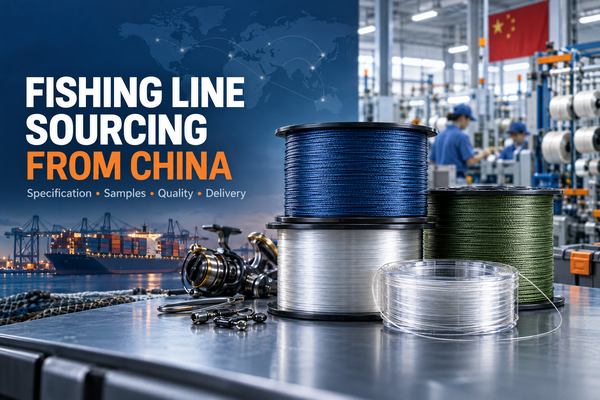
Importing fishing lines from China can be a lucrative business[^1], but it requires careful planning and execution. The key lies in starting with measurable product specifications rather than chasing the lowest price. From line construction to final packaging, every detail matters when selecting the right supplier for your needs.
To successfully import fishing lines from China, define your product specifications in detail[^2], verify samples against signed spec sheets, and inspect shipments for performance, packaging, and compliance. Account for total landed cost—not just factory FOB pricing[^3]—to avoid unexpected expenses.
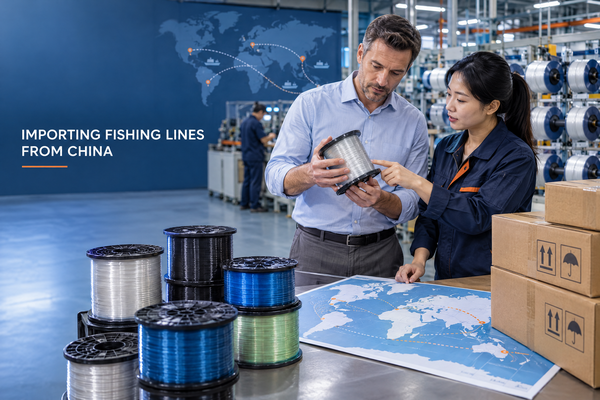
To dive deeper, let’s break down the process step by step.
What should you prioritize when sourcing fishing lines in China?
Many buyers make the mistake of asking for the lowest price upfront, only to face issues with quality, consistency, or incomplete specifications later. Instead, start with performance-focused product requirements.
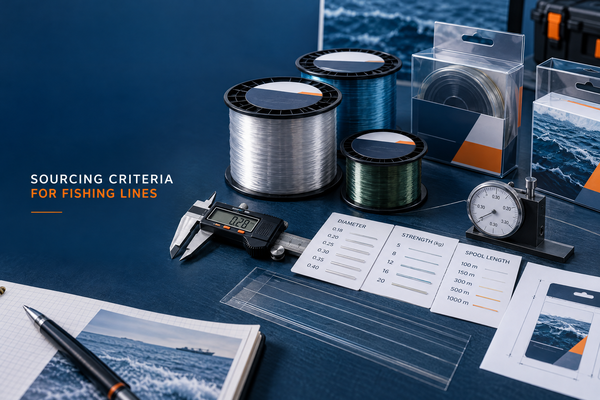
Focus first on measurable parameters like line material, diameter, breaking strength[^4], construction, length, spool specifications, and packaging requirements. These are the foundation for reliable fishing line production.
Dive deeper: Defining your fishing line specifications
When sourcing fishing lines, the first step is to develop a detailed product specification tailored to your application. For example:
- Line material: Nylon monofilament, fluorocarbon, PE braided line, etc.
- Diameter (line thickness): Critical for capacity and handle.
- Breaking strength: Target pound test depending on the application.
- Construction: Number of strands (for braided lines) or PVDF content (for fluorocarbon).
- Color style: Translucent, dyed, dual color, or spotted.
- Packaging: Spool length, spool design, retail-ready boxes or bulk packaging.
By providing suppliers with these specifications upfront, you create clarity and reduce the risk of miscommunication. It’s also essential to state any specific tolerance limits—for example, +/- 3% for line diameter.
A comprehensive inquiry should always include packaging details. Whether you need individual spools for retail or bulk reels for wholesale, those packaging requirements impact both production and logistics costs.
Why is sample approval critical before placing large orders?
You should never place a purchase order based solely on catalog descriptions or initial quotes. Sample approval ensures that what you're buying meets your expectations—both on paper and in real-world performance.
Request a signed specification sheet and verify benchmark samples[^5]. Keep sealed samples for comparison during mass production and shipment inspections.

Dive deeper: Verifying and sealing samples
The sample approval stage is where you finalize measurable benchmarks for quality. Here are some best practices:
- Request detailed specifications in writing: This includes line diameter, breaking strength, knot performance, abrasion resistance, spool dimensions, and packaging tolerances.
- Inspect samples physically: Test the line’s strength, memory, flexibility, or abrasion resistance in targeted conditions.
- Seal the approved samples: Once accepted, ensure both parties retain sealed samples for reference during production.
- Document results: Match sample tests with specification sheets for accountability.
Remember, samples should not be approved visually alone—performance testing reduces the risk of mismatches in production batches.
By setting clear benchmarks during sample approval, you avoid “surprises” like poor packaging quality or inconsistent breaking strength. These benchmarks form the foundation of an effective purchase contract.
What contract terms should you negotiate when placing an order?
A well-structured purchase contract minimizes risk by defining expectations for tolerances, inspections, shipping terms, and non-compliance handling.
Include details on quality tolerances, inspection standards, labeling, barcoding[^6], export documentation, shipping terms, and procedures for managing defective products.

Dive deeper: Creating strong supplier agreements
This document should outline every key requirement, such as:
- Tolerance limits: For line diameter, spool length, and breaking strength.
- Inspection methods: Include specific performance tests (e.g. tensile testing or knot strength analysis).
- Labeling and barcoding: Requirements for retail, wholesale, and export.
- Packaging requirements: Define spool designs, box dimensions, and corrugated carton specifications.
- Incoterms (like FOB or CIF): Specify the trade terms governing transportation and risks.
- Non-conformance actions: Procedures for managing defective or non-compliant products.
For example, a strong contract may state: “Breaking strength tests must pass tolerance limits of +/-3%, as witnessed by independent QC inspectors, prior to shipment. Non-conforming goods shall be replaced by the supplier at no extra charge.”
This attention to detail ensures smooth fulfillment and reduces delays or disputes.
How should you handle pre-shipment inspections?
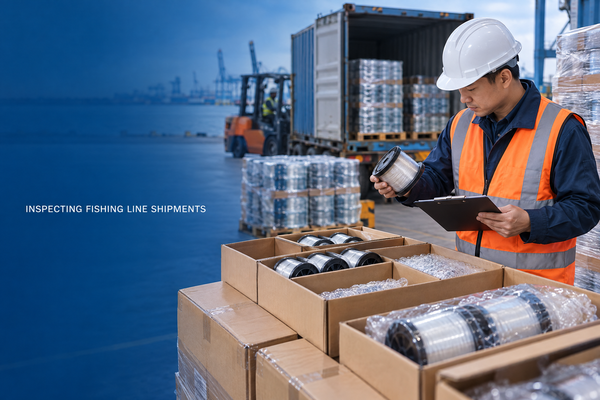
A pre-shipment inspection is vital to confirm both quantity and quality before shipment. Never assume that correct carton counts indicate good product performance.
Pre-shipment inspections must include performance sample testing[^7], quantity verification, and packaging checks. Conduct these inspections before goods leave the factory.
Dive deeper: What to inspect during pre-shipment checks
Break your inspection into these major checkpoints:
- Performance audits: Randomly sample fishing lines and test their breaking strength, diameter consistency, and knot reliability.
- Quantity counts: Verify carton and spool quantities match the packing list.
- Packaging quality: Check for correct spool winding, protective wrapping, retail boxes, and outer cartons.
- Compliance audit: Confirm labels, barcodes, and export documents meet required standards.
Statistics matter. If 2% of tested samples fail during inspection, determine whether this tolerance is acceptable or rejects should be made. This helps you protect your reputation after import.
What costs should you account for beyond factory pricing?
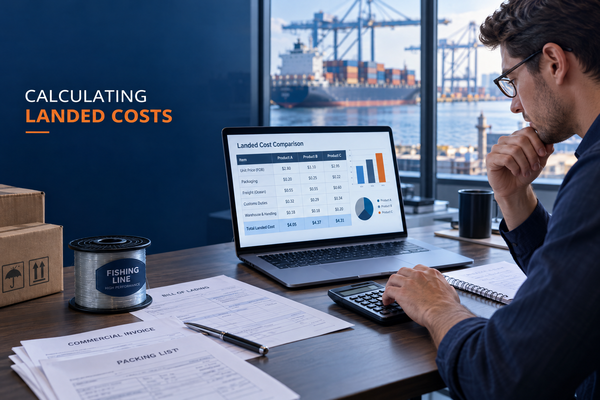
Calculating the full landed cost is critical to maintaining profitability[^8]. Direct factory price represents just one portion of your total expenses.
Landed costs include product pricing, tooling fees, inspections, shipping, customs duties, local handling, and inventory storage—ensure the lowest FOB price actually results in reasonable total costs.
Dive deeper: Breaking down total landed costs
Here is a breakdown of expenses buyers often overlook:
| Cost Factor | Example |
|---|---|
| Factory price (FOB) | Fishing line production costs per unit. |
| Tooling fees | Spool molds or packaging changes. |
| Inspection costs | Pre-shipment QC, sample testing. |
| Shipping rates | Ocean freight and container loading. |
| Customs duties | Import tariffs based on country of delivery. |
| Local handling fees | Distribution center charges or port fees. |
| Inventory financing | Holding and storage costs waiting for sales. |
If this analysis shifts a supplier’s lowest quote into an inefficient high-cost outcome, it’s worth reevaluating the sourcing partner.
Frequently Asked Questions
What is the best fishing line material for saltwater?
For saltwater fishing, PE braided lines are a popular choice due to their high strength[^9], small diameter, and sensitivity. Fluorocarbon leader lines may add abrasion resistance for fishing near rocks or reefs.
How do importers test fishing line quality?
Fishing line quality is tested through breaking strength analysis, knot performance testing, and abrasion resistance evaluations[^10]. Many importers also inspect diameter consistency and winding spool quality.
What is FOB pricing?
FOB (Free on Board) pricing refers to the cost of goods up to their departure from the factory port[^11]. FOB does not include shipping, customs, or other landed costs which should be considered separately.
Conclusion
Importing fishing lines from China requires careful product definition[^12], strong supplier agreements, and thorough quality inspections. Start by detailing measurable specifications, approving benchmark samples, and negotiating contracts that align with your needs. Ensure pre-shipment inspections check performance, not just carton counts, and evaluate total landed costs—beyond FOB pricing.
Ready to take the next step? Contact us to discuss how we can support your fishing line import and OEM requirements. Let’s make your next project a success!
[^1]: "Field directive federal excise tax on the importation and ...", https://www.irs.gov/businesses/small-businesses-self-employed/field-directive-federal-excise-tax-on-the-importation-and-manufacture-of-fishing-and-archery-products. A study on global fishing line market trends indicates that imports from China are cost-effective due to lower production costs and high demand in recreational fishing markets. Evidence role: general_support; source type: research. Supports: The profitability of importing fishing lines from China.. Scope note: Profitability may vary depending on specific market conditions and import regulations. [^2]: "Import for Export", https://www.fda.gov/industry/import-basics/import-export. Educational resources on international trade emphasize that detailed product specifications help mitigate risks of quality issues and miscommunication with suppliers. Evidence role: general_support; source type: education. Supports: The importance of detailed product specifications in ensuring quality and reducing miscommunication in imports.. Scope note: The effectiveness of specifications may depend on supplier compliance and enforcement mechanisms. [^3]: "FOB vs. Ex-Factory vs. Landed Cost: What Each Price Means", https://www.toolio.com/post/difference-between-landed-cost-fob-cost-or-ex-factory-cost. Trade education materials highlight that landed costs, including duties, shipping, and storage, often exceed FOB pricing and are critical for accurate profitability analysis. Evidence role: general_support; source type: education. Supports: The importance of considering total landed costs over FOB pricing in import decisions.. Scope note: Specific cost components may vary by country and product category. [^4]: "fireline production tables", https://www.fs.usda.gov/t-d/nwcg/. Research on fishing line manufacturing demonstrates that material composition, diameter, and breaking strength are critical for achieving consistent product performance. Evidence role: mechanism; source type: research. Supports: The role of measurable parameters in ensuring consistent fishing line production quality.. Scope note: The findings may be specific to certain types of fishing lines, such as braided or monofilament. [^5]: "The effects of grounding (earthing) on inflammation, the ... - PMC", https://pmc.ncbi.nlm.nih.gov/articles/PMC4378297/. Educational materials on quality control emphasize that specification sheets and benchmark samples help ensure supplier accountability and product consistency. Evidence role: general_support; source type: education. Supports: The importance of signed specification sheets and benchmark samples in quality assurance for imports.. Scope note: Effectiveness depends on the enforcement of agreed specifications during production. [^6]: "Know Your Incoterms", https://www.trade.gov/know-your-incoterms. Trade education resources highlight that detailed contracts specifying tolerances, inspections, and labeling reduce disputes and ensure compliance. Evidence role: general_support; source type: education. Supports: The role of detailed contract terms in minimizing risks in international trade.. Scope note: The effectiveness of contract terms depends on enforcement and supplier reliability. [^7]: "Pre-shipment inspection", https://en.wikipedia.org/wiki/Pre-shipment_inspection. Educational resources on quality control in trade emphasize that pre-shipment inspections help identify defects and ensure compliance with specifications. Evidence role: general_support; source type: education. Supports: The importance of pre-shipment inspections in ensuring product quality before shipment.. Scope note: Inspection effectiveness may depend on sampling methods and inspector expertise. [^8]: "What Is Landed Cost and How To Calculate It", https://www.fedex.com/en-us/small-business/articles-insights/what-is-landed-cost.html. Educational resources on trade finance emphasize that landed cost calculations help importers account for all expenses and maintain profitability. Evidence role: general_support; source type: education. Supports: The importance of calculating landed costs to ensure profitability in imports.. Scope note: Specific cost components may vary by product and destination. [^9]: "Is there an advantage to using braided line? : r/Fishing_Gear", https://www.reddit.com/r/Fishing_Gear/comments/vy1vj8/newbie_question_is_there_an_advantage_to_using/. Research on fishing line materials indicates that PE braided lines offer superior strength and sensitivity, making them suitable for saltwater applications. Evidence role: general_support; source type: research. Supports: The preference for PE braided lines in saltwater fishing due to their high strength and sensitivity.. Scope note: Performance may vary based on specific fishing conditions and techniques. [^10]: "Line strength and rated pounds : r/FishingForBeginners", https://www.reddit.com/r/FishingForBeginners/comments/11kcvp5/line_strength_and_rated_pounds/. Studies on fishing line testing methods confirm that breaking strength, knot performance, and abrasion resistance are critical metrics for assessing quality. Evidence role: mechanism; source type: research. Supports: The use of breaking strength, knot performance, and abrasion resistance tests as standard methods for evaluating fishing line quality.. Scope note: Standards may vary by region or fishing line type. [^11]: "FOB (shipping)", https://en.wikipedia.org/wiki/FOB_(shipping). Encyclopedia entries on international trade define FOB pricing as the cost of goods up to their departure from the factory port, excluding shipping and customs costs. Evidence role: definition; source type: encyclopedia. Supports: The definition of FOB pricing as covering costs up to the factory port departure.. [^12]: "International Trade Definitions", https://www.census.gov/foreign-trade/reference/definitions/. Educational materials on sourcing emphasize that clear product definitions reduce miscommunication and improve supplier compliance. Evidence role: general_support; source type: education. Supports: The necessity of careful product definition for successful fishing line imports.. Scope note: Effectiveness may depend on supplier reliability and enforcement mechanisms.