
How to Choose the Right Fishing Line Construction for Your Target Market
Fishing line can break because of abrasion, knot weakness, physical damage, excessive loading, diameter differences, or inconsistent material and production properties.[^1] A proper diagnosis should identify where the line failed before changing the product specification. The right fishing line construction depends on understanding performance demands in fishing applications and analyzing patterns of failure.
When creating fishing lines for a specific target market, there’s no universal solution. Each market has distinct needs based on fishing methods, preferences, and environmental conditions. Let’s explore how the construction of fishing lines can address performance demands while mitigating potential failure risks.
What factors affect fishing line failure in the target market?
Fishing line failure is often cited by users, but the causes vary widely depending on usage and product design.
The problem: Without knowing the cause of failure, manufacturers may end up redesigning lines that don’t need changing — or skip evaluating critical performance factors entirely.
The solution: Analyze failure patterns systematically. Matching construction features to a target market’s key applications reduces issues like breakage, poor abrasion resistance, and inconsistent performance.[^2]
Common failure patterns and causes
Here are typical failure scenarios, their potential causes, and what manufacturers should verify:
| Failure | Possible Cause | What to Check |
|---|---|---|
| Breaks in open water | Line damage / specification issue | Diameter + tensile strength |
| Breaks at knot | Knot performance | Knot strength |
| Breaks near rocks | Abrasion damage | Abrasion resistance |
| Breaks during casting | Damage / overload / line condition | Surface + tensile performance |
| Repeated breakage | Batch or application mismatch | Batch comparison |
As the table shows, fishing line construction must be tailored based on frequent challenges faced by users. Failing to address these variables could result in user dissatisfaction, returns, and long-term market trust issues.
How do different fishing line constructions address market needs?
Not all fishing line constructions perform equally under varying conditions. Some are built tough for saltwater abrasion, while others prioritize flexibility for casting ease in freshwater environments.
The problem: A line designed for durability might sacrifice casting sensitivity; a line optimized for knot strength might not fare well near rocks.
The solution: Align fishing line construction with the performance priorities dictated by your target market's application demands.
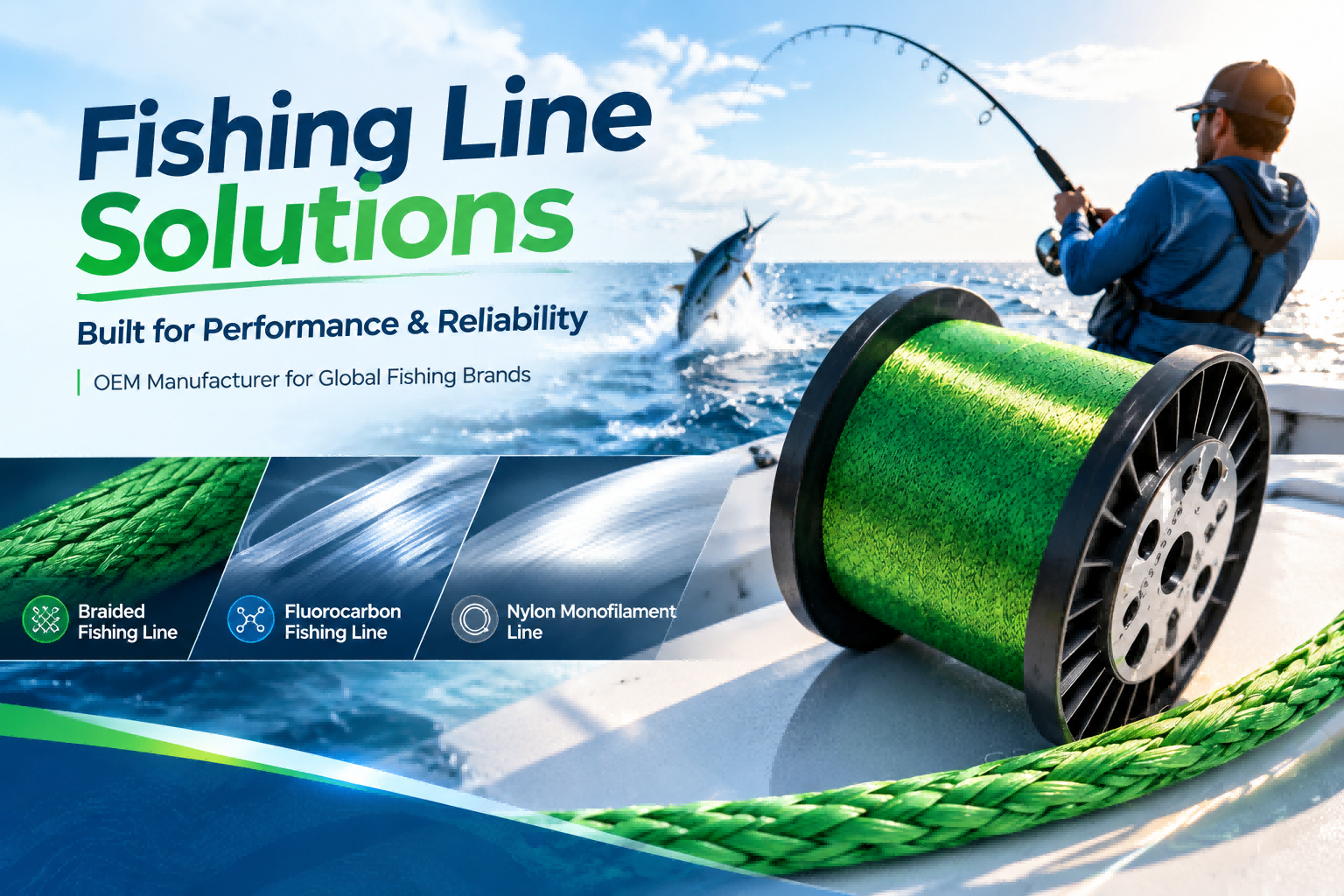
Types of fishing line construction
-
Monofilament Lines
Simple single-strand construction offers stretch and flexibility but is susceptible to abrasions. -
Braided Lines
Multi-strand interwoven construction provides high strength and sensitivity at smaller diameters, but can require additional tools for efficient knot tying. -
Fluorocarbon Lines
Heavier and more abrasion-resistant than mono, often used as leaders in saltwater fishing for connection durability. -
Hybrid Lines
Combines the advantages of different materials like braided cores wrapped with abrasion-resistant coatings for toughness and flexibility.
Matching construction to usage
- Saltwater anglers: PE braided lines combined with fluorocarbon leaders for abrasion resilience.
- Freshwater anglers: Nylon monofilament for managing flexibility and stretch during casual angling.
- Heavy-duty users: Braided lines with high breaking strengths in conjunction with thick fluorocarbon near abrasive structures.
What features ensure successful performance alignment?
Understanding the connection between material properties and practical fishing performance is crucial.
The problem: Some manufacturers prioritize cost control over consistent, predictable fishing results, leaving customers with poor batch-to-batch performance reliability.
The solution: Use measurable benchmarks during supplier selection, production reviews, and quality control inspections.
Critical performance indicators
- Breaking Strength: Identify whether the pound-test consistently matches target environments (open water vs. structure-heavy zones).
- Abrasion Resistance: Evaluate under simulated repeated contacts against rough surfaces.
- Knot Strength: Test connections using expected tying methods within the target market.
- Diameter Consistency: Over-thick or ultra-thin lines can behave unpredictably during use — verify tolerances for uniformity.
- Surface Durability Tests: Check whether coatings or exposed fiber materials behave predictably under load cycles.
These tests help manufacturers define objective criteria during sample evaluation, ensuring reliability beyond marketing promises.
Why is proper market segmentation essential?
The target market ultimately defines which fishing line works best. Selling an overly general product increases the risk of missed specifications and user dissatisfaction.
The problem: Generic solutions rarely meet diverse fishing applications effectively — they either underperform or outprice competitors.
The solution: Segment markets by fishing methods, species targeted, and application intensity (casual recreational vs. professional tournament).
Example segmentation: Freshwater vs. saltwater markets
| Market | Primary Needs | Recommended Construction |
|---|---|---|
| Freshwater | Balance sensitivity, casting, and manageability | Monofilament or braided lines |
| Saltwater | Resist rocks + offer tensile durability | PE braided main line with fluorocarbon leader |
| Heavy-duty/trophy | High breaking strength under full load scenarios | Braided + thick fluorocarbon (40lbs+) spec |
Each approach ensures niche alignment based on necessary features, rather than forcing generic solutions into overstressed applications.
Frequently Asked Questions
Why do braided lines sometimes behave poorly in knot tests?
Braided lines can slip when knots aren't tied with pretensioning or aren't specifically matched to low-friction fibers. Fluorocarbon leaders can improve connections.
What’s the best fishing line for casual users in freshwater?
Nylon monofilament often works well due to its flexibility, manageable cost structure, and forgiving stretch characteristics during casting.
How do saltwater environments impact fishing line durability?
Saltwater exposes lines to repetitive abrasion from reefs, rocks, and heavy loads — requiring PE braided main lines and fluorocarbon leaders for combined strength and abrasion protection.
Conclusion
Choosing the right fishing line construction for your target market depends on evaluating causes of failure, aligning construction with user needs, and segmenting your market effectively. Understanding performance errors during use can help manufacturers improve tensile strength, knot reliability, abrasion resistance, and batch uniformity.
If you're gearing your brand for success in the fishing industry, let’s collaborate to define perfect fishing line specifications that truly meet your market's demands. Reach out today for customized solutions tailored to your customers.
[^1]: "Comparing Measured Fluorocarbon Leader Breaking ...", https://ui.adsabs.harvard.edu/abs/arXiv:1202.5260. A study on fishing line durability identifies abrasion, knot weakness, and material inconsistencies as common causes of failure under various conditions. Evidence role: general_support; source type: research. Supports: Fishing line failure can result from abrasion, knot weakness, physical damage, excessive loading, diameter differences, or inconsistent material and production properties.. Scope note: The study may focus on specific types of fishing lines or environments, limiting general applicability. [^2]: "What Causes Anglers to Leave Behind Less Fishing Line and ...", https://ncseagrant.ncsu.edu/hooklinescience/what-causes-anglers-to-leave-behind-less-fishing-line-and-other-litter/. Industry guidelines suggest that customizing fishing line construction for specific applications improves performance and reduces common failure risks. Evidence role: general_support; source type: institution. Supports: Tailoring fishing line construction to specific market applications can mitigate issues such as breakage, poor abrasion resistance, and inconsistent performance.. Scope note: The guidelines may not provide quantitative data on the extent of performance improvement.